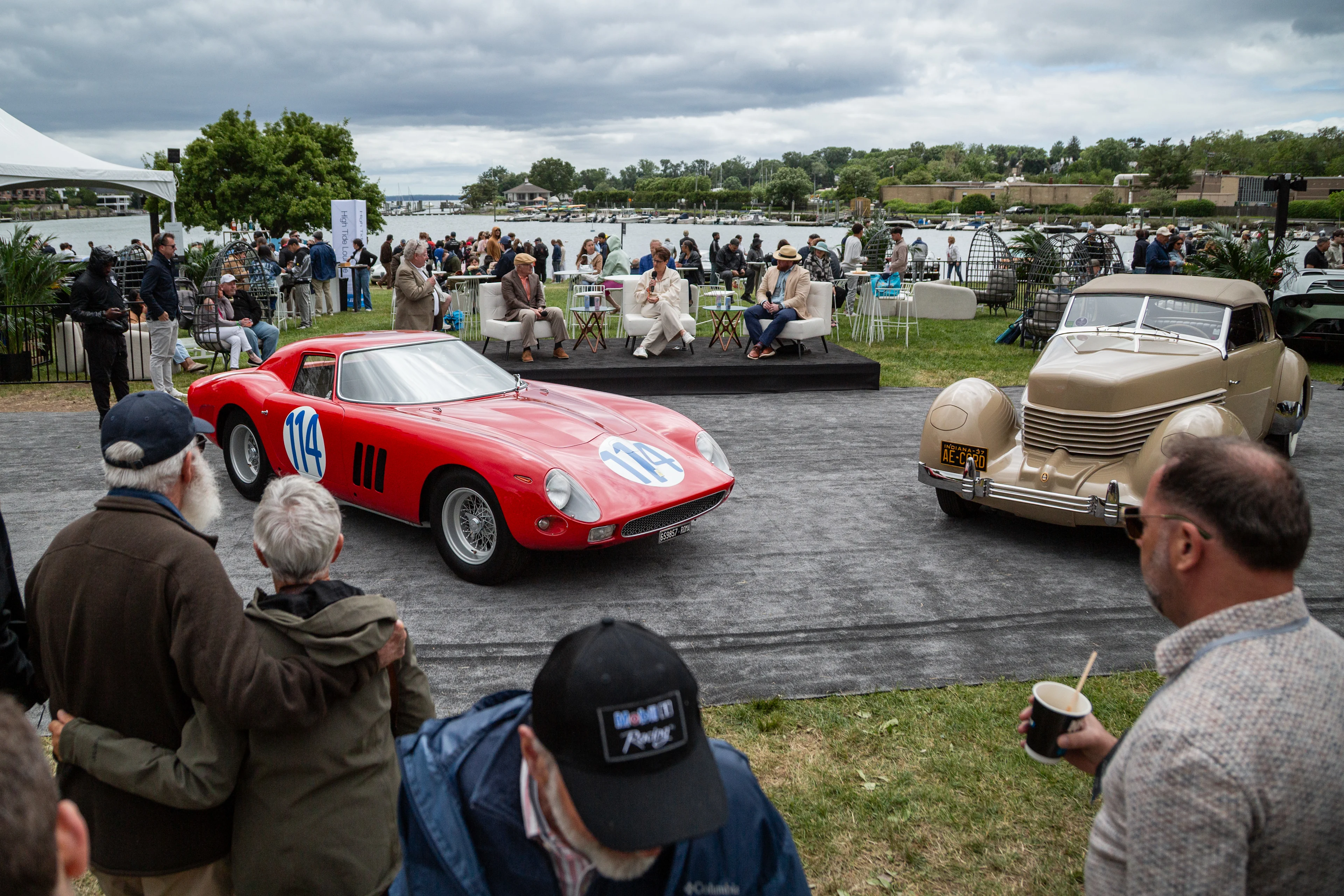
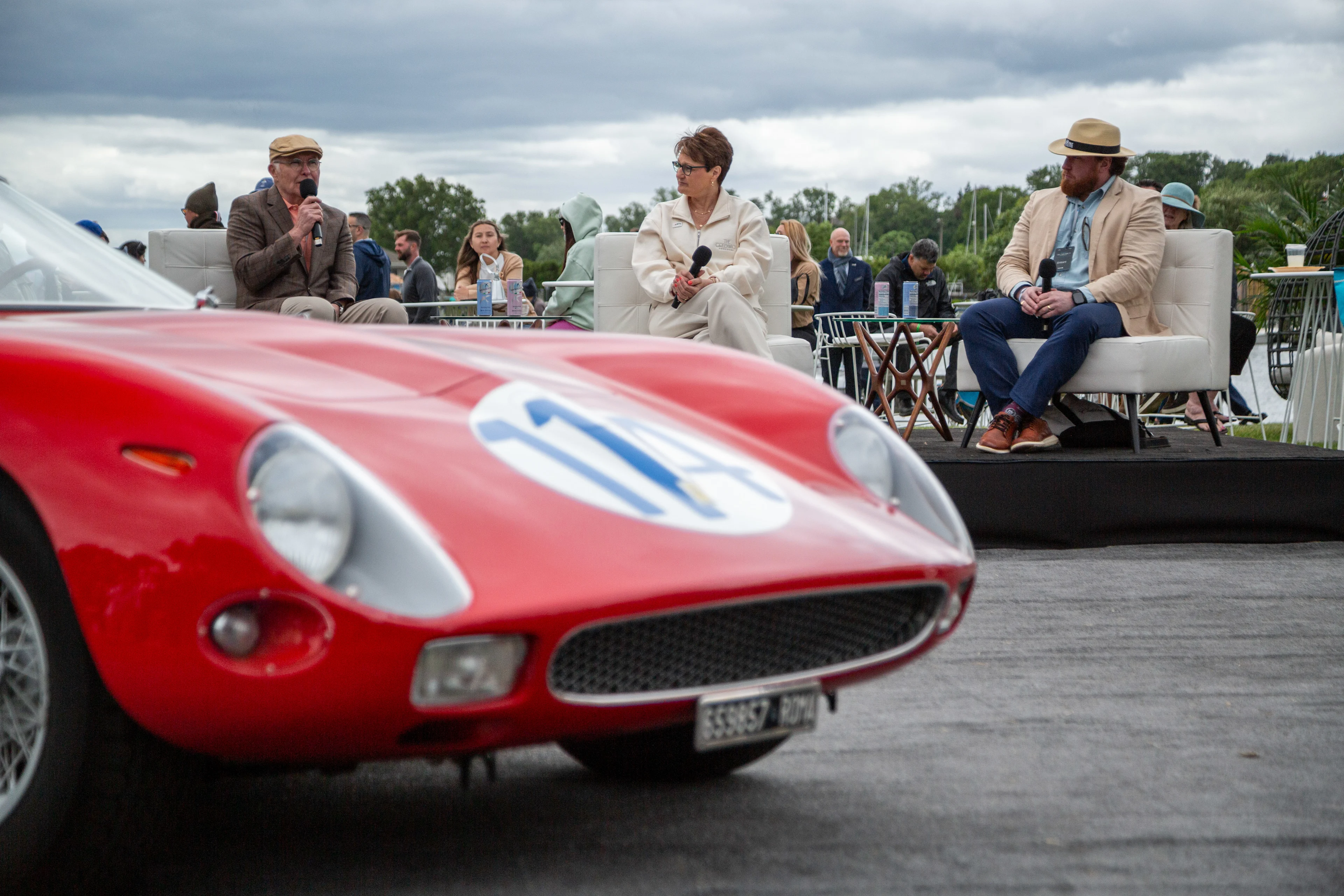
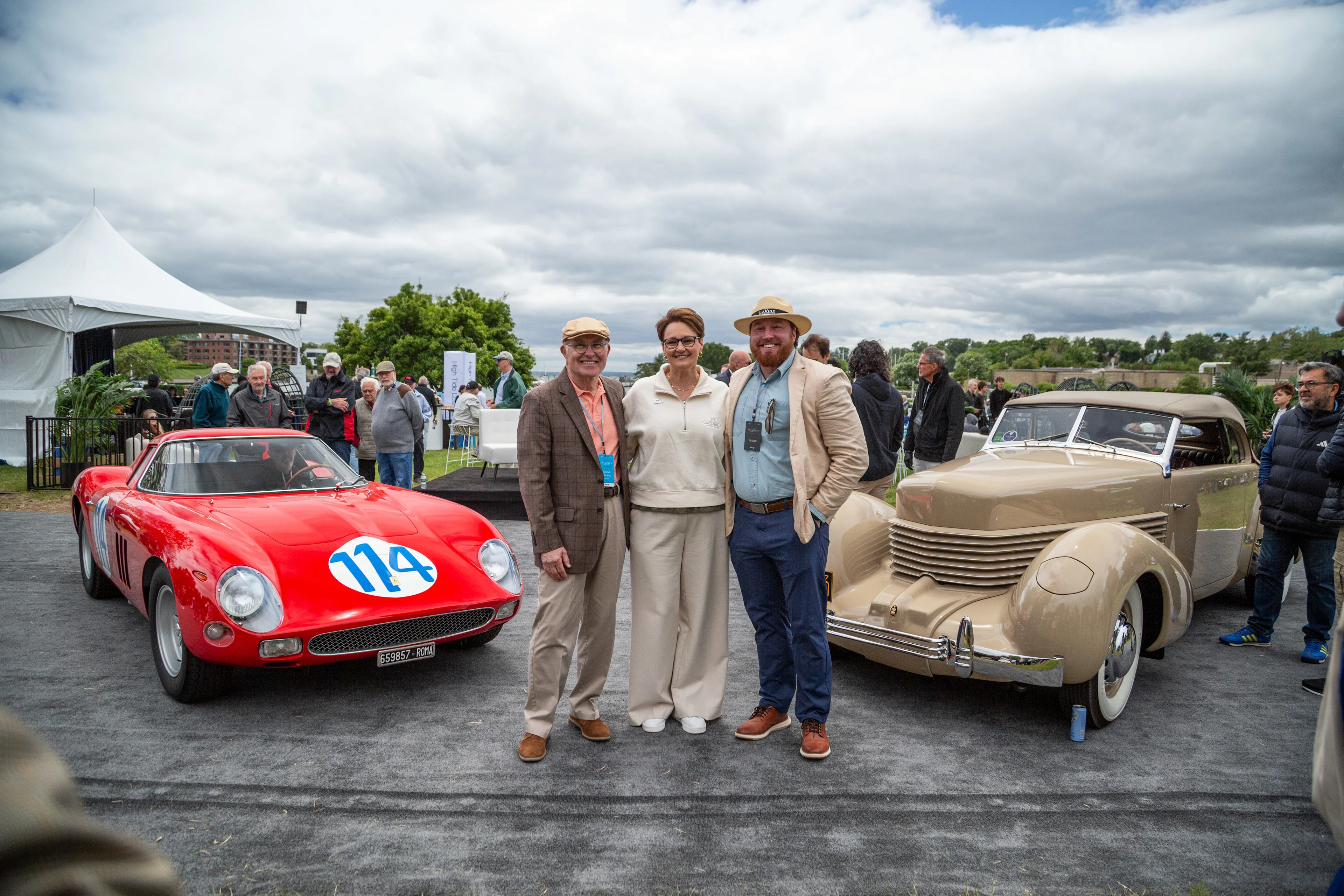
On a Saturday morning at the 2026 Greenwich Concours d’elegance, two very special cars served as the backdrop for a conversation that cut to the heart of what the collector car hobby is really about. One was a 1962 Ferrari 250 GTO — the third one built, one of only 36 in existence, and among the most valuable collector cars on the planet. The other was a 1937 Cord that once belonged to aviation pioneer Amelia Earhart. Together, they set the stage for a High Tide Talk on the future of automotive restoration.
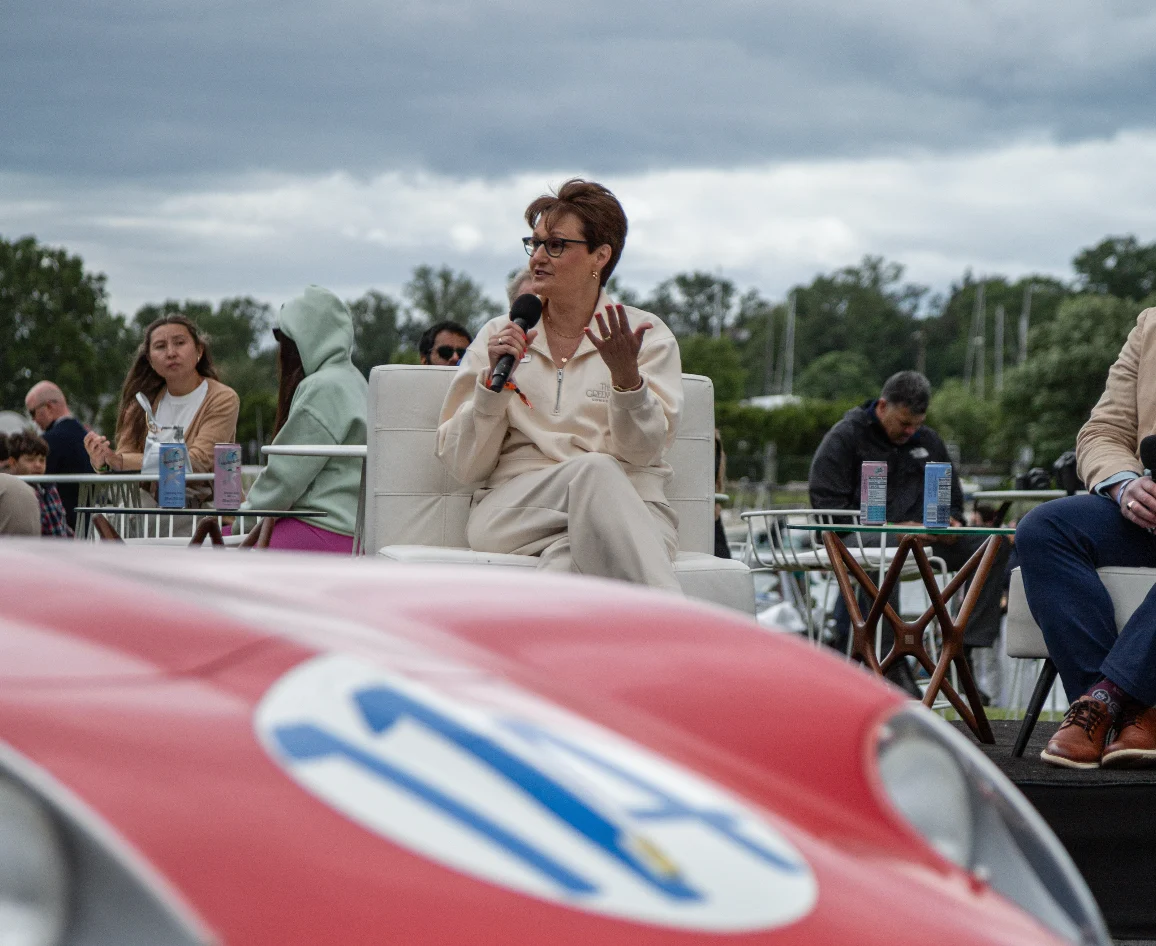
Moderated by concours host Bill Rothermel, the panel brought together Paul Russell of Paul Russell and Company — this year's Grand Marshal, whose restorations were celebrated in a dedicated display at the event — Travis LaVine of LaVine Restorations in Nappanee, Indiana, and Amanda Gutierrez, Vice President for Auto Restoration at McPherson College in Kansas — the only accredited four-year degree program in automotive restoration in the world. The conversation they had was part craft deep-dive, part honest industry reckoning.
It starts with research
Before a tool is ever picked up, both Russell and LaVine described a restoration process that looks a lot like detective work. The first question isn't how to fix a car — it's when. Choosing a specific moment in a car's history, and committing to returning it to exactly that point, shapes every decision that follows.
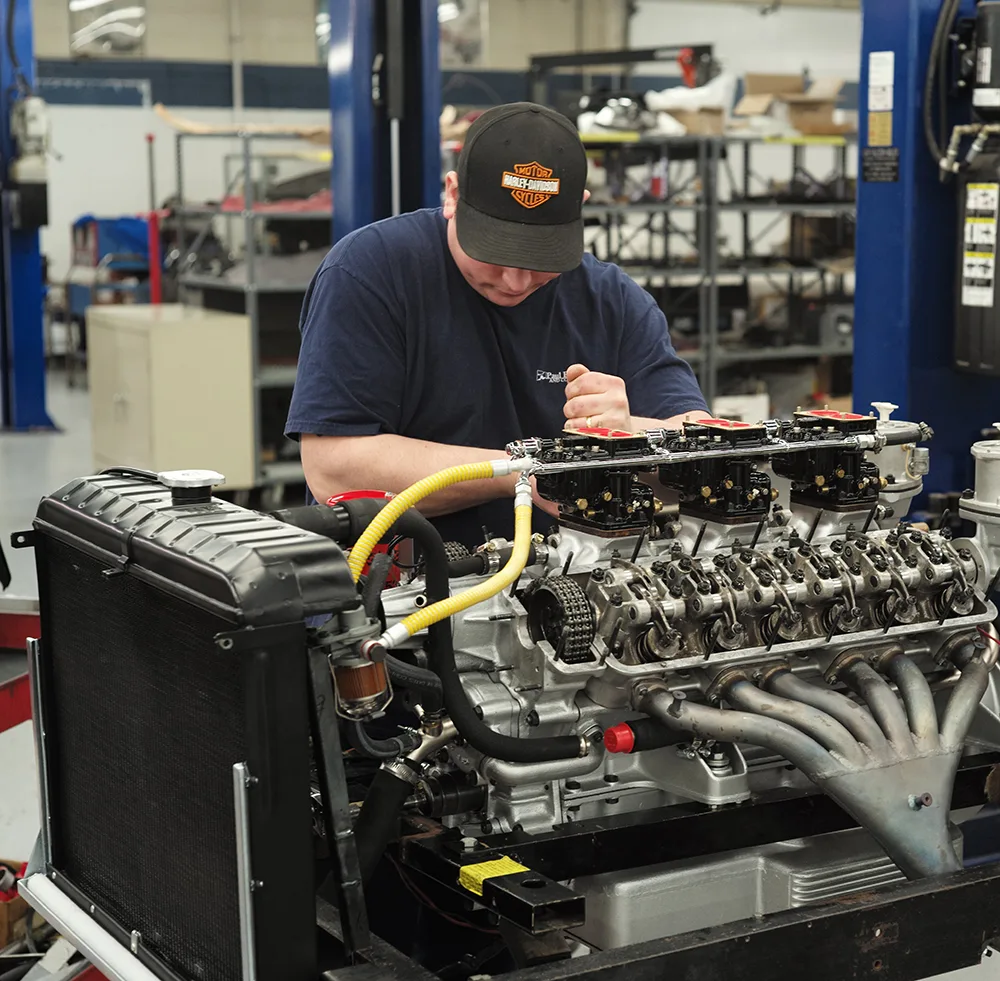
For Russell, that meant tracing the GTO's Italian racing career through photographs, books, and the physical evidence left in the car itself by decades of teams modifying it to go faster. The car had been rebodied at the Ferrari factory in December 1963, giving it the Series Two configuration you see today. "Our job is to unwind it," Russell explained, "to bring it back to that specific point in time." The car had raced at the Targa Florio, where it won its class — twice, once in each body — and every detail of the restoration was built around honoring that history accurately.
LaVine faced a different puzzle with the Cord. The company went out of business in 1937 and left behind almost no factory records. The car itself was technically a 1936 model, renumbered as a 1937 as was common for the final 200 or so Cords produced — and it had been modified continuously, even during its original production run, with no consistent documentation of what changed when. Piecing together what the car looked like when Earhart owned it required fifty-two years of institutional knowledge, factory floor diary entries from workers who had since passed, and an intimate familiarity with how each surviving car differs from the next.
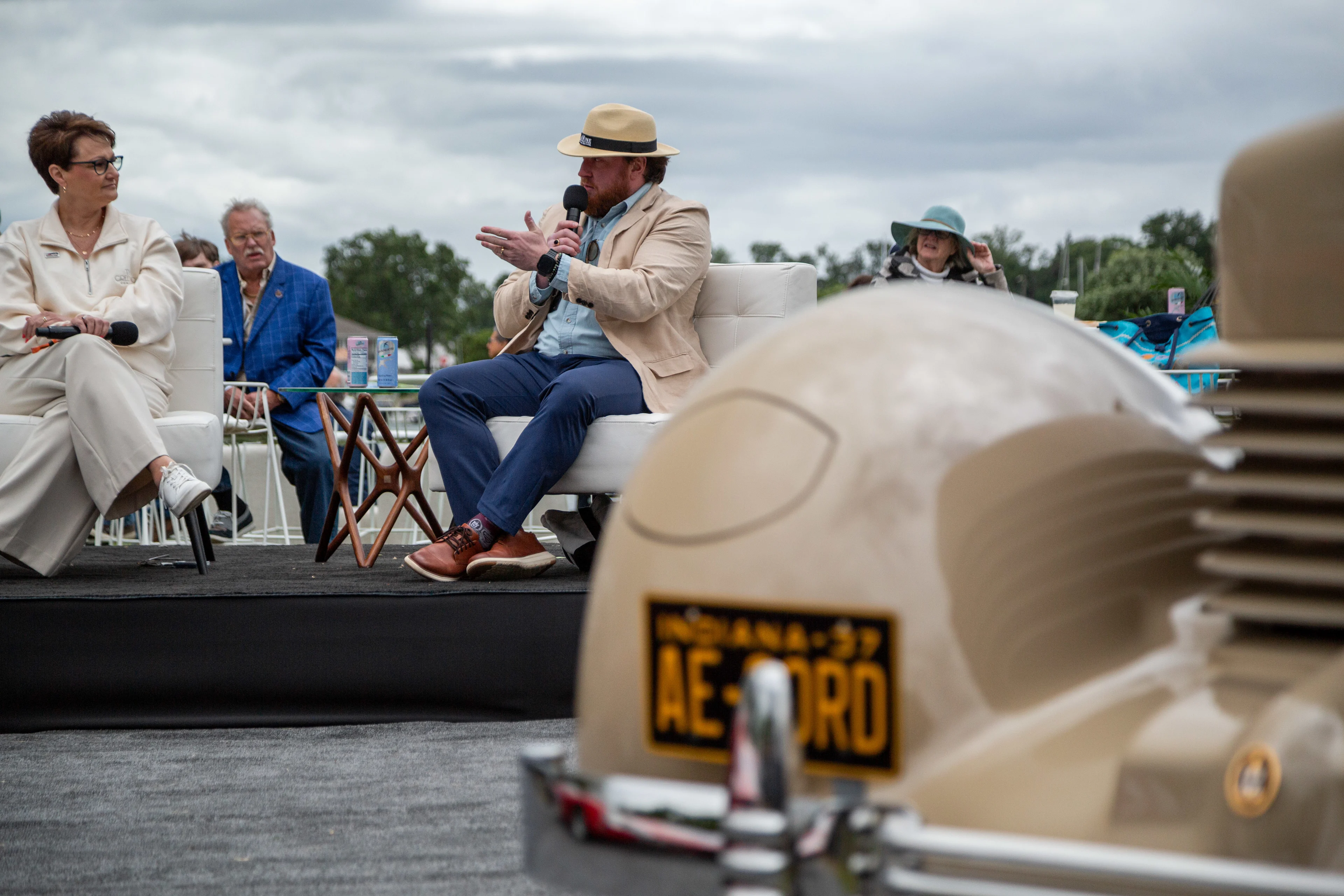
"It's akin to prepping a case for trial — going through all the historical references to ensure you're complying with the historical accuracy. This is a piece of art and history, and if you don't treat it with the requisite care, you're doing a disservice to the car and the world."
TRAVIS LAVINE, LAVINE RESTORATIONS
A trade that demands more than skill
What both restorers pushed back against was any suggestion that this work is simply a matter of fixing dents and painting panels. LaVine, who left a career in international tax law to take over the family restoration business his parents founded in 1974, made a point that seemed to surprise some in the crowd: the intellectual demands of concours-level restoration, he argued, rival anything the professional world has to offer.
"This is some of the most intellectually challenging work I've ever done," he said. "You're having to use all of your faculties — research, problem-solving, historical knowledge — to produce something tangible, in quality, in the time required." The best people in the trade, he noted, aren't just skilled with their hands. They are rigorous thinkers, curious by nature, and willing to keep learning long after they've mastered the basics.
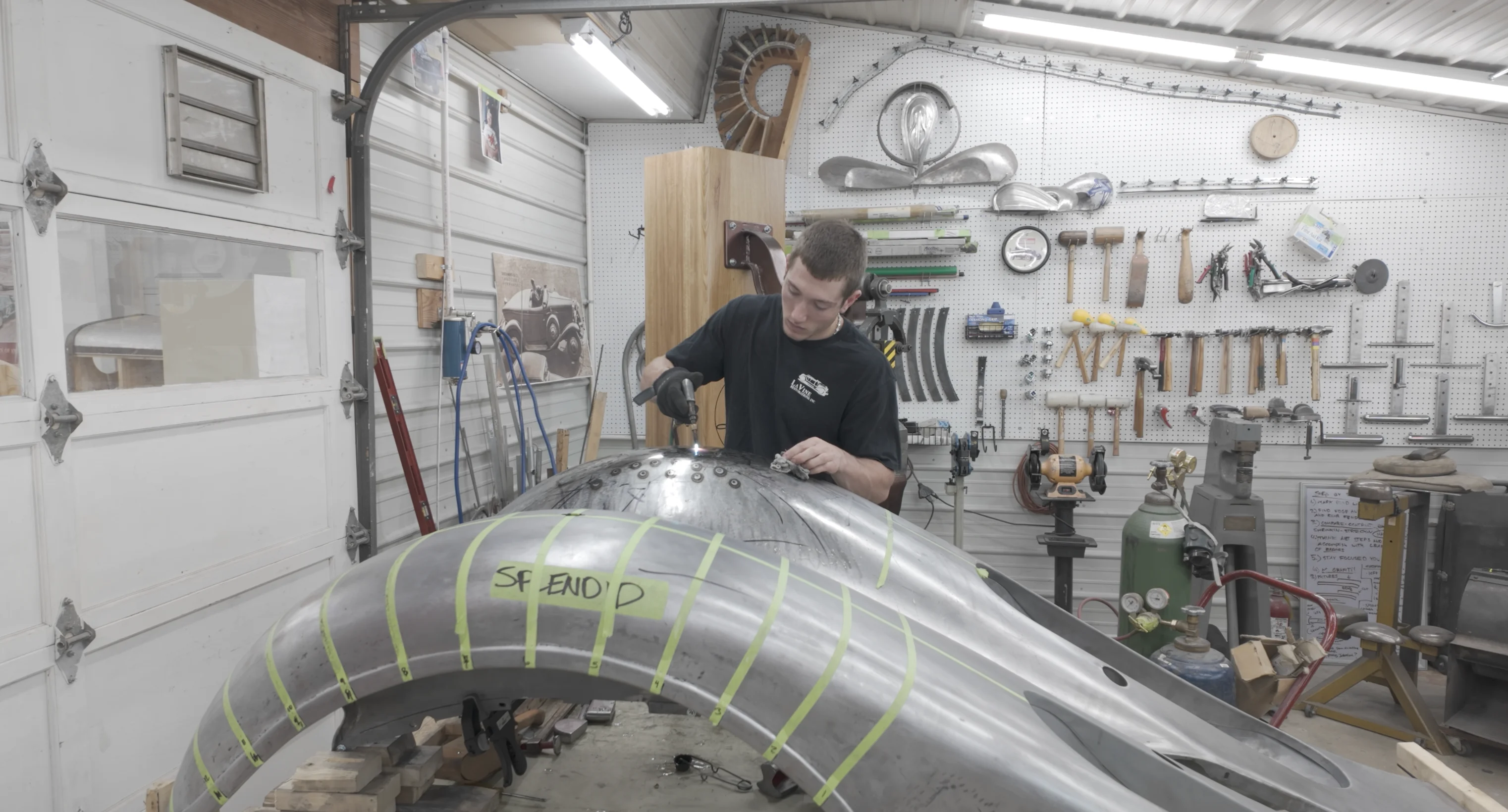
At both shops, new apprentices are paired with experienced craftspeople and given time to observe before they participate, rotating through different disciplines — bodywork, panel beating, mechanical — to discover where their passion and aptitude truly lie. "We look for someone who is teachable, humble, and a good listener," Russell said. "Because the people who've been doing this for thirty or forty years have an enormous gift to pass on."
Building the next generation
That's where Amanda Gutierrez and McPherson College enter the picture. The program she leads is designed to meet students wherever their love of cars begins — whether that's a single marque they grew up around, a passion for NASCAR, or simply a feeling that working with their hands is where they belong. The curriculum broadens that starting point into a full understanding of automotive history, design, and the research methods that underpin serious restoration work.
"A student comes in having experience with one make or era of car," Gutierrez explained, "and through our programs they get to see cars across the full spectrum of how they developed. It moves from being something that looks good or is fast, to understanding the stories behind them." One student arrived loving NASCAR and left knowing how to drive a Model T — and went on to work in a racing collection. Another may come as a career-changer in their forties, done with desks and screens, ready to learn something real. Gutierrez said those students are often the most committed of all.
A quiet moment during the talk said as much as anything spoken aloud. While LaVine was describing the Cord's history, Gutierrez noticed a girl — around eight years old — photographing the car. "What's the next step?" she asked the crowd. "How do we get her beyond taking a picture, to thinking: I could restore that someday?" It's the question the entire panel kept circling back to.
The road ahead
The panel was candid about the challenges facing the restoration world. LaVine pointed to supply chain as the most immediate pressure: the pool of original parts and period-correct components is finite, and it is depleting. The answer, he argued, lies in embracing adjacent technologies — CNC machining, laser scanning, precision fabrication — that can reproduce what can no longer be sourced. "We have to be adaptable," he said. "That's our future."
Russell's concern was more about people. The craftspeople who carry the deepest knowledge are aging, and the responsibility for passing that knowledge on falls squarely on the senior generation. "It's incumbent on the people in their 60s and 70s to say, let's give this person five years to develop," he said. "You have to have the patience to invest in someone and bring them along. You can't assume nobody wants to do this — there are candidates out there."
The Hagerty Drivers Foundation has been working to address exactly these challenges. Since 2000, Hagerty has funded scholarships and grants totaling more than $3 million in support of automotive education — backing institutions like McPherson College and partner organizations including the RPM Foundation, which also presented the Restorer's Award at Greenwich this weekend.
Russell closed with a thought someone had passed on to him years ago, one that had clearly stayed with him. "You just have to make the light bulb go off," he said. "I don't care if you like to make miniatures or fly an airplane or whatever. Dream big and do it."
After the panel wrapped, all three speakers stayed on the waterfront to take questions — standing beside the GTO and the Cord, two objects that represent thousands of hours of exactly the kind of work they'd been discussing. The cars are irreplaceable. The people who know how to care for them very nearly are too. Conversations like this one are part of how the hobby ensures that doesn't become the whole story.
To learn more about how the Hagerty Drivers Foundation supports automotive education and restoration training, visit driversfoundation.org.
About the Panelists
Paul Russell is the founder of Paul Russell and Company, a leading automotive restoration firm. He served as Grand Marshal of the 2026 Greenwich Concours d’elegance, where a special display showcased a selection of his restorations.
Travis LaVine is the principal of LaVine Restorations in Nappanee, Indiana, a family business established in 1974. He and his team restored the ex-Amelia Earhart 1937 Cord from the collection of Jack Smith.
Amanda Gutierrez is the Vice President for Auto Restoration at McPherson College in Kansas, home of the only accredited four-year degree program in automotive restoration in the world. For more information, visit mcpherson.edu.



%20Opt-Out%20Icon.svg)