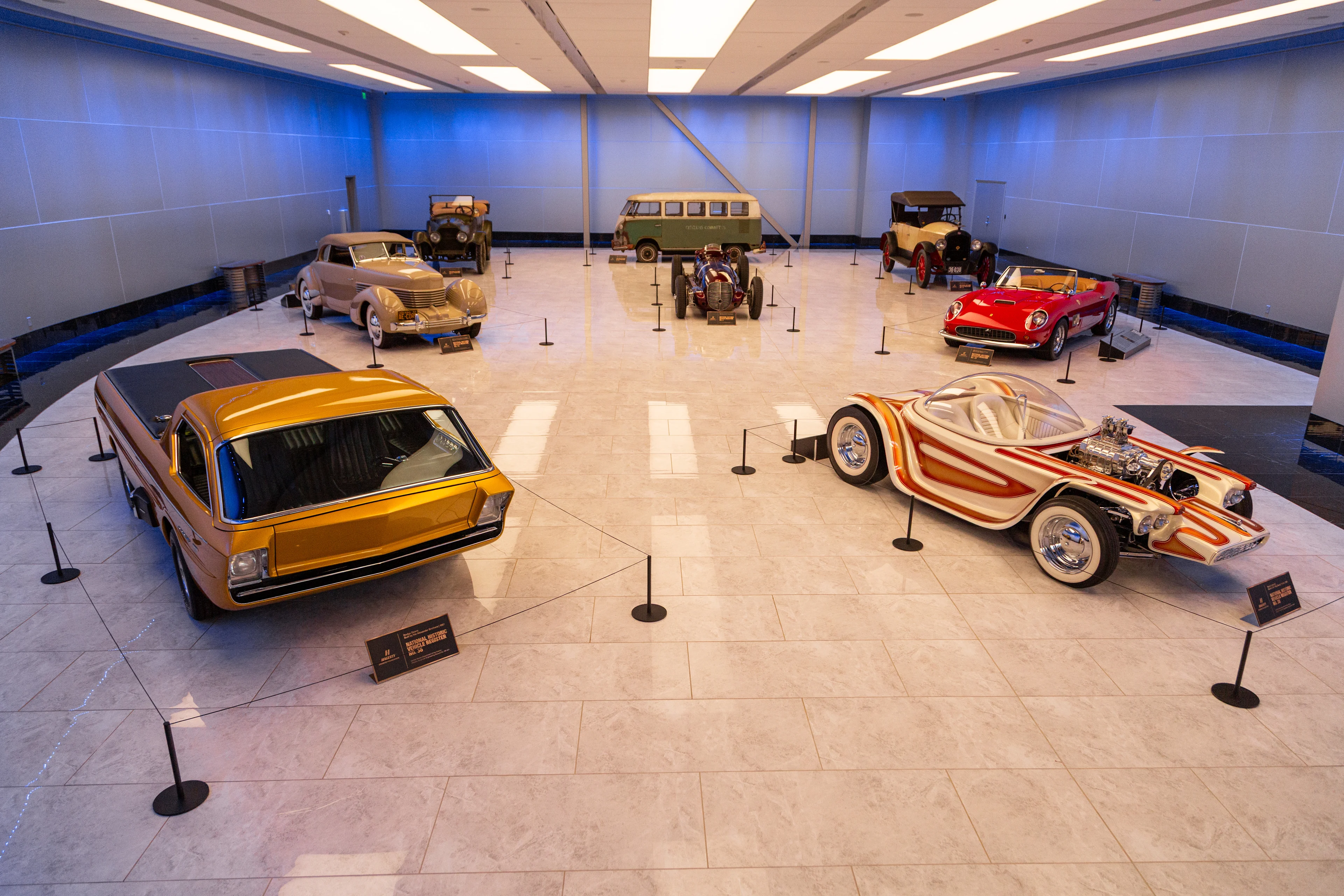
A 1918 Cadillac that served at the front in World War I. A Maserati that won Indianapolis twice despite being built for European road courses. Amelia Earhart's last car. A Volkswagen that was a footsoldier in the civil rights movement. A replica Ferrari so convincing it starred in one of the most beloved films of the 1980s. Together, they make the case that automobiles are not just machines — they are primary documents of American history. And now, for the first time, eight of them are in the same room.
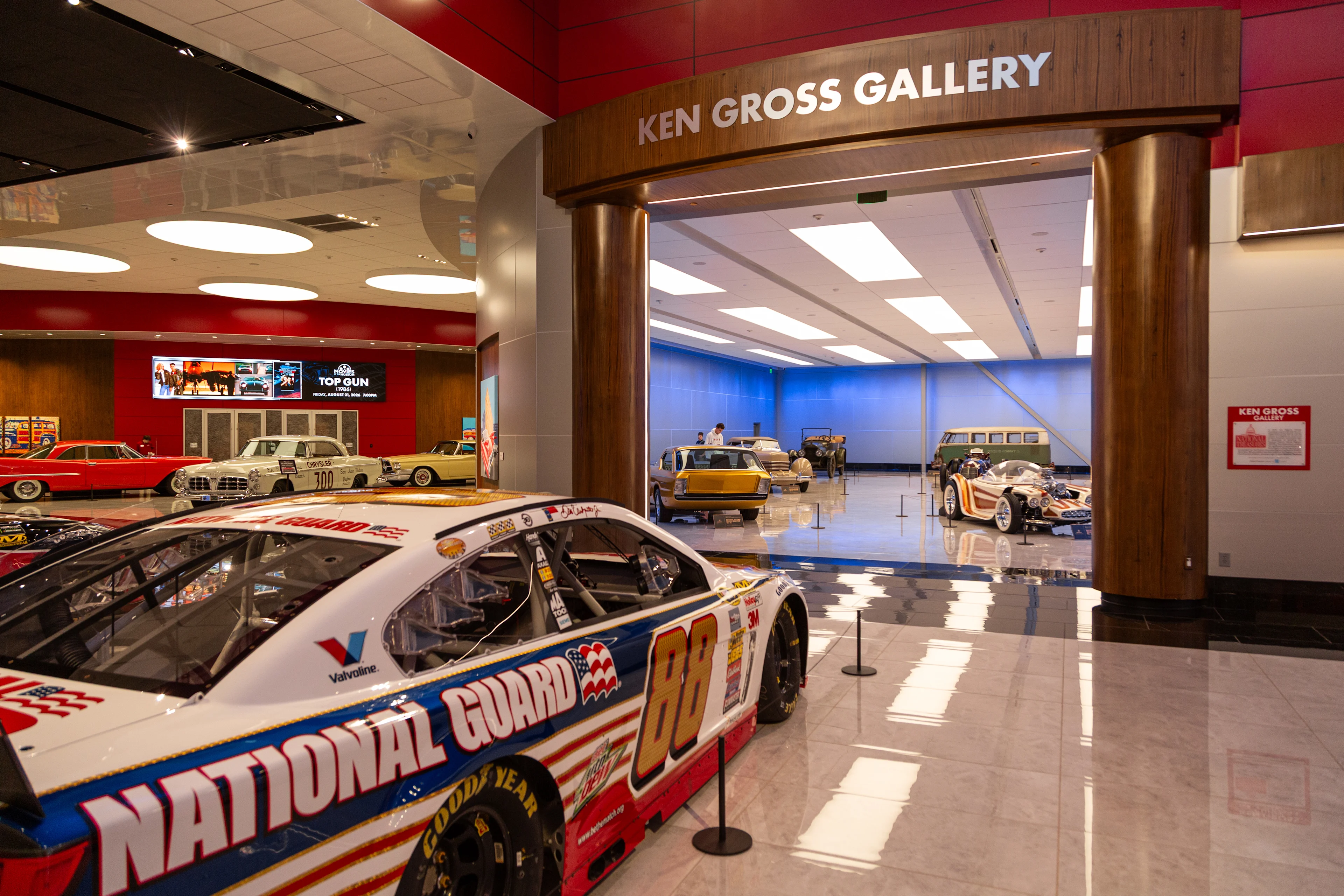
The Hagerty Drivers Foundation has partnered with the Savoy Automobile Museum to present “National Treasures: Cars on the National Historic Vehicle Register”, open to the public through December 6, 2026. Each vehicle in the exhibition has been officially documented on the National Historic Vehicle Register, administered by the Hagerty Drivers Foundation in partnership with the U.S. Department of the Interior, with records permanently archived at the Library of Congress — recognizing each car as historically significant to the American story.
The National Historic Vehicle Register was established in 2013, taking its cues from the Historic American Engineering Record — a federal program dating to 1969 that preserves bridges, industrial sites, and other significant structures through documentation rather than physical protection. The NHVR applies the same principle to automobiles. When a vehicle is nominated, specialists produce a comprehensive record: historical research, photography, technical documentation, and laser scanning to capture precise measurements of the vehicle. Everything is permanently archived at the Library of Congress. The first car added to the Register, in January 2014, was a 1964 Shelby Cobra Daytona Coupe. The eight vehicles in the “National Treasures” exhibition span NHVR entries No. 3, 4, 13, 22, 26, 33, 35, and 36 — a cross-section of more than a decade of documentation work.
The Hagerty Drivers Foundation administers the National Historic Vehicle Register in partnership with the U.S. Department of the Interior. Beyond documentation, the Foundation works to bring these vehicles before the public — through exhibitions, documentary films, and an annual display on the National Mall in Washington, D.C. The “National Treasures” exhibition at the Savoy Automobile Museum is the latest expression of that mission.
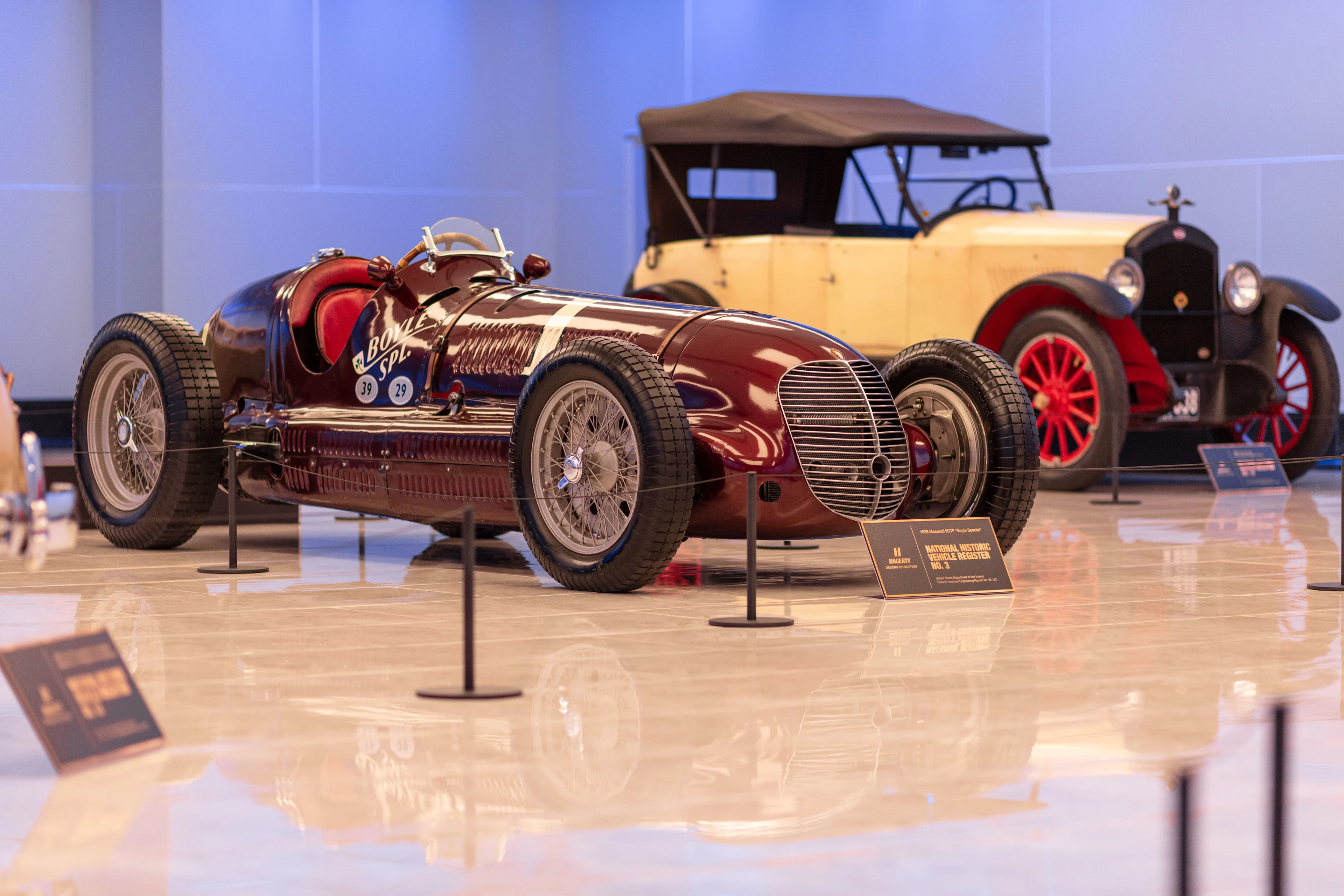
The 1938 Maserati 8CTF — “Boyle Special” (NHVR No. 3)
Built in September 1938, the Maserati 8CTF was acquired by Chicago union leader and race team owner Mike Boyle, whose mechanic Harry W. “Cotton” Henning prepared it for Indianapolis. Driven by Wilbur Shaw, it won the Indianapolis 500 back to back in 1939 and 1940, and remains the most successful automobile to compete at the race, with two wins, two third-place finishes, and a fourth. It is part of the collection of the Indianapolis Motor Speedway Hall of Fame Museum.
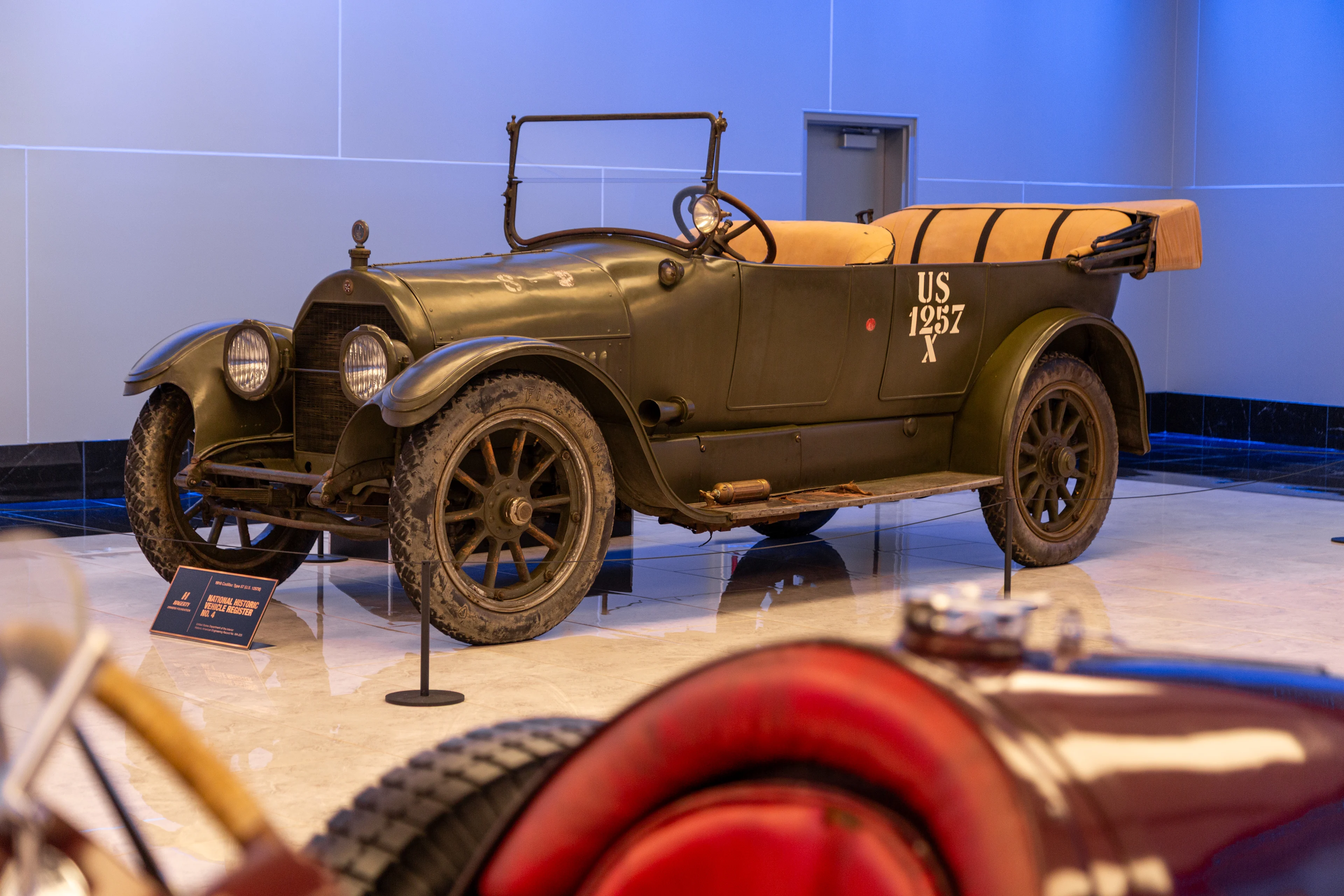
The 1918 Cadillac Type 57 — U.S. 1257X (NHVR No. 4)
Purchased in August 1917 by Rev. Dr. John Hopkins Denison, a YMCA secretary who donated the car and his services as driver to support the American Expeditionary Forces in France, this Cadillac became the 257th passenger car registered by the AEF. Rev. Denison chauffeured Mrs. Theodore Roosevelt Jr. — the first American woman sent to France by the YMCA — and served at the front during the Second Battle of the Marne, the turning point that led to the armistice on November 11, 1918. It is owned by Marc Lassen of Gardiner, Washington.
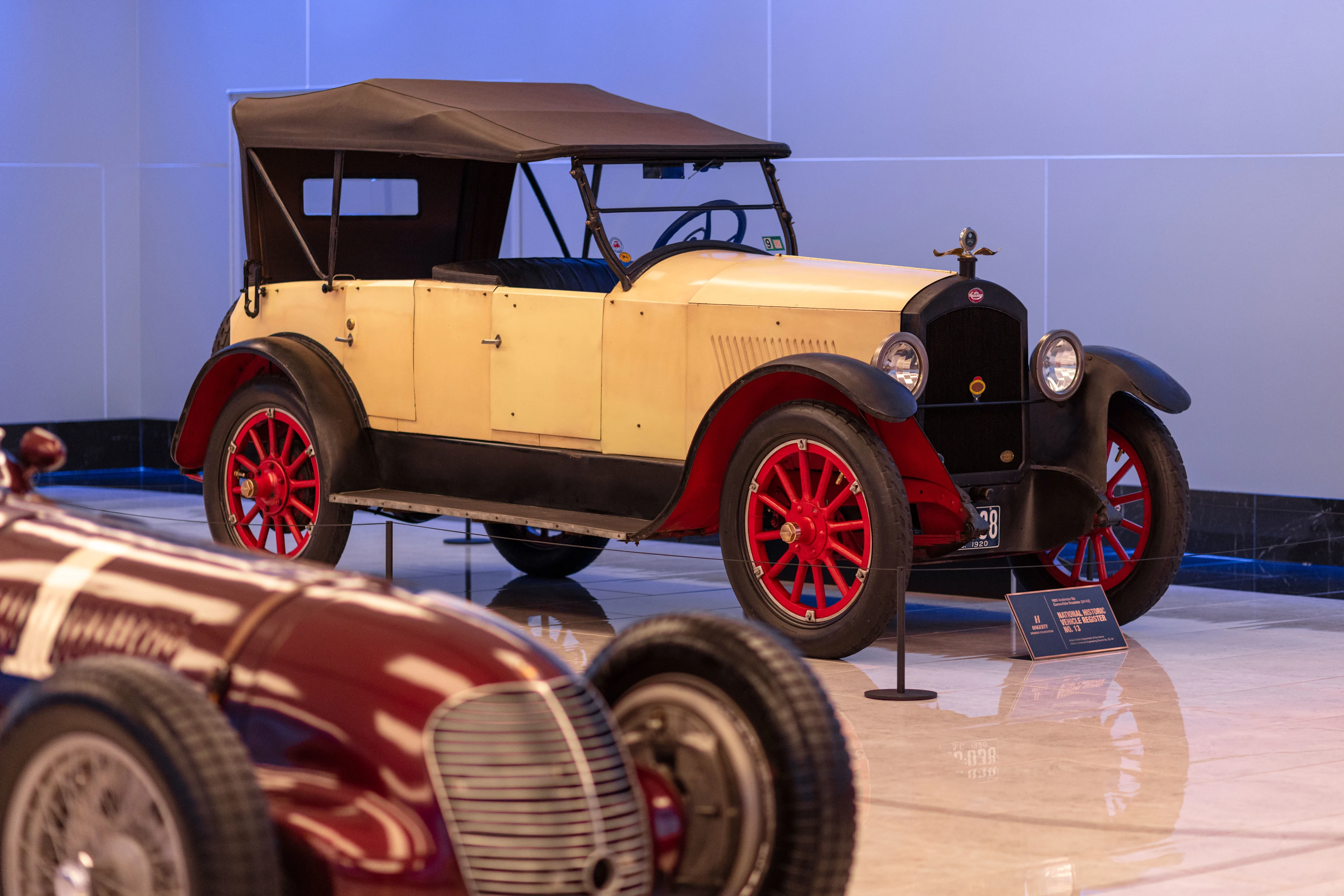
The 1920 Anderson Six Convertible Roadster (NHVR No. 13)
The Anderson Motor Company was based in Rock Hill, South Carolina, and produced cars from 1916 to 1926. This Anderson Six — car number 34142 — is the only known surviving example of the company’s patented Convertible Roadster body style, which could quickly convert from a sleek roadster to a five-passenger touring car. It has never been fully restored and still runs its original numbers-matching Continental 7-R engine. The car is owned by Mr. Ianaurio, who acquired it in 1989 and brought it back to South Carolina.
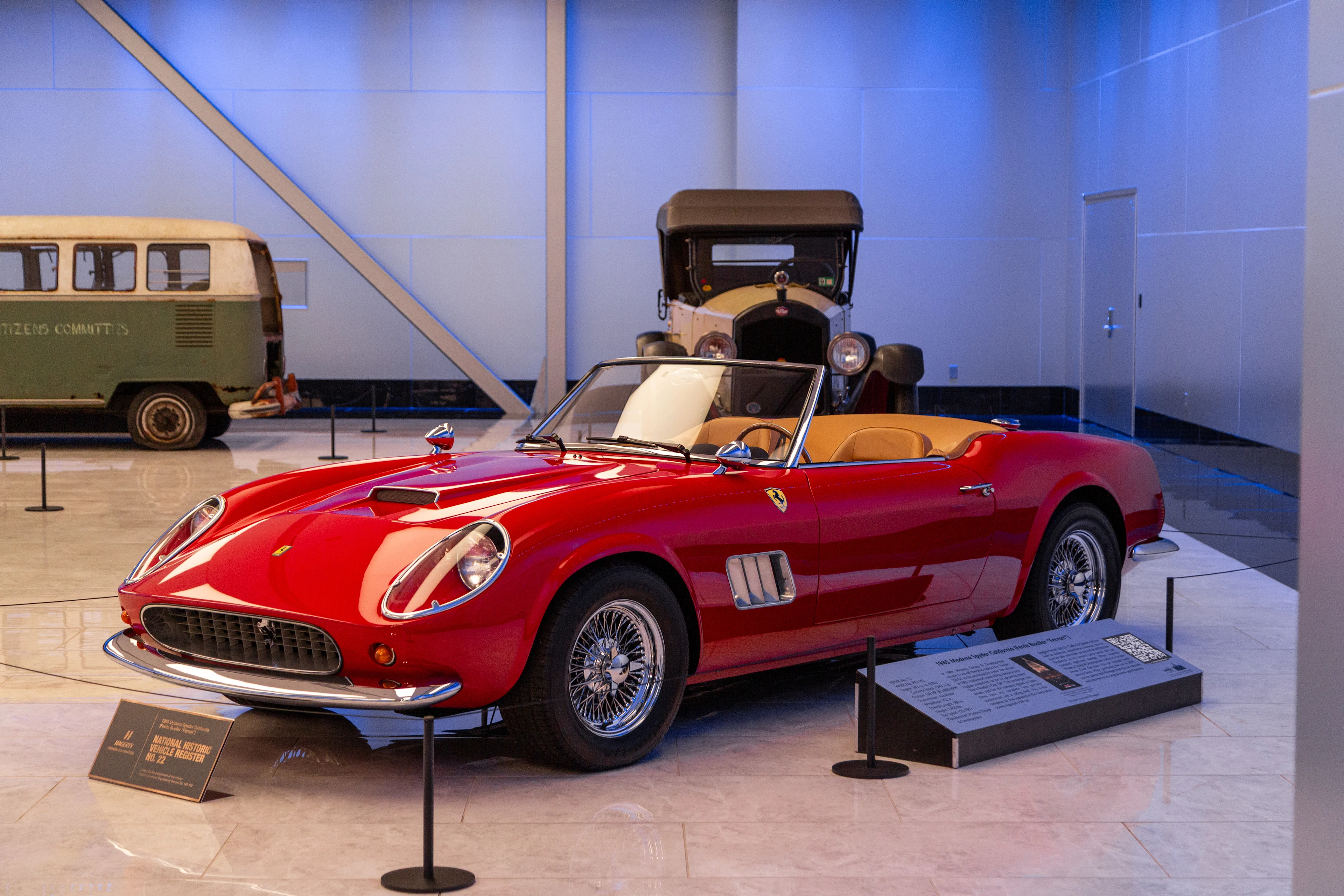
The 1985 Modena Spyder California (NHVR No. 22)
In 1984, Mark Goyette and Neil Glassmoyer of Modena Design & Development in El Cajon, California built a fiberglass replica of a Ferrari 250GT California. Before they could launch their business, director John Hughes called them about using the car for Ferris Bueller’s Day Off — an actual Ferrari was too expensive for the studio to rent or use. Three cars were built on a tight timeline for the film, and this one — the completed car used for wide shots — is documented on the National Historic Vehicle Register. The film premiered in June 1986. It is owned by Bob Winegard, who had it restored to its original film specifications.
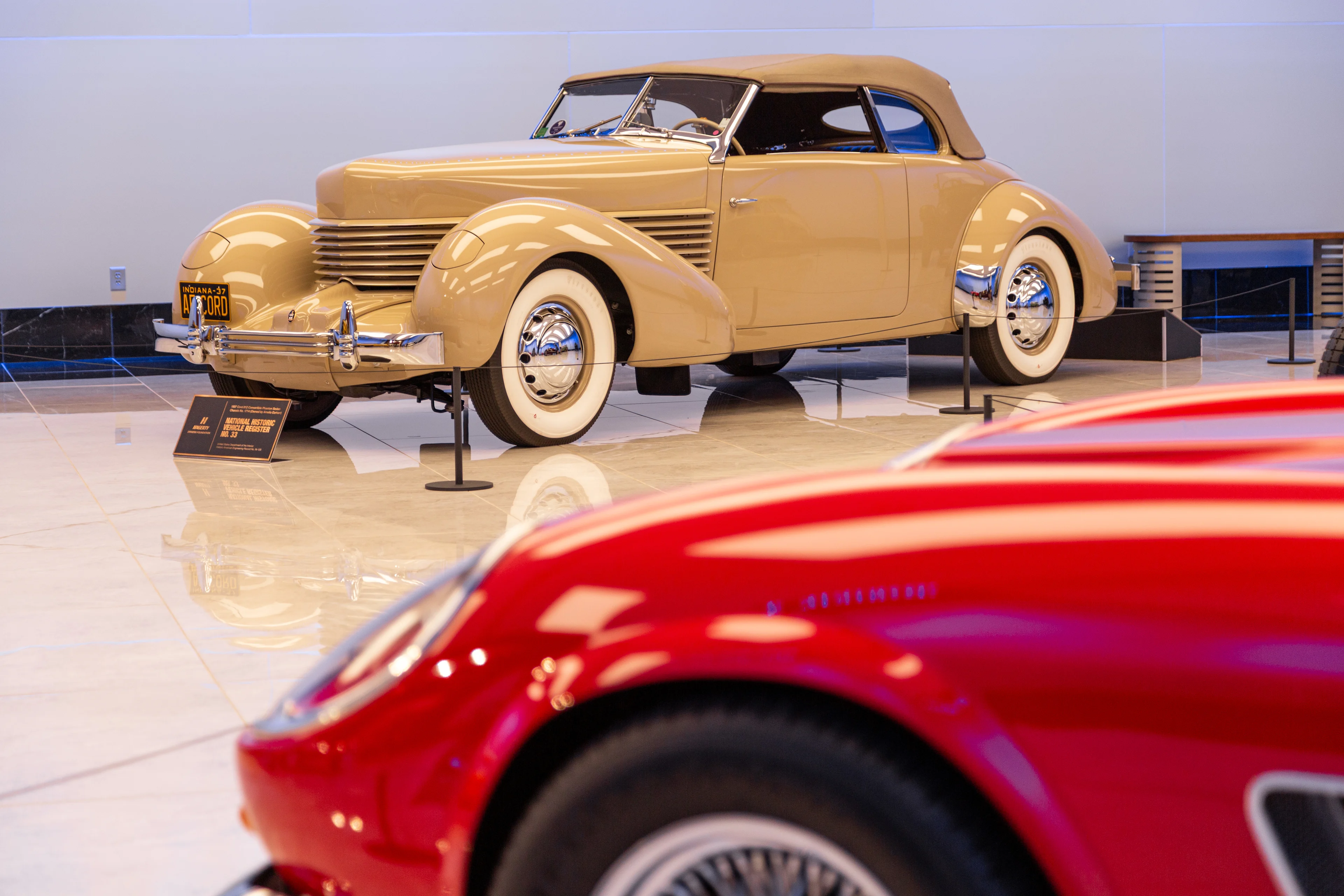
The 1937 Cord 812 Phaeton Convertible (NHVR No. 33)
Amelia Earhart acquired this Cord less than a year before she and navigator Fred Noonan disappeared over the South Pacific in 1937. In September 1936, she was photographed standing with the Cord alongside the Lockheed Electra she would take on her final flight. After her disappearance, her husband George Putnam sold the car. It passed through many owners, was eventually disassembled, and its parts were scattered across the country. After decades of research, the body, frame, and engine were reunited by Ray Foster in 2004 and fully restored in 2018 by LaVine Restorations. It is now in the care of the JBS Collection.
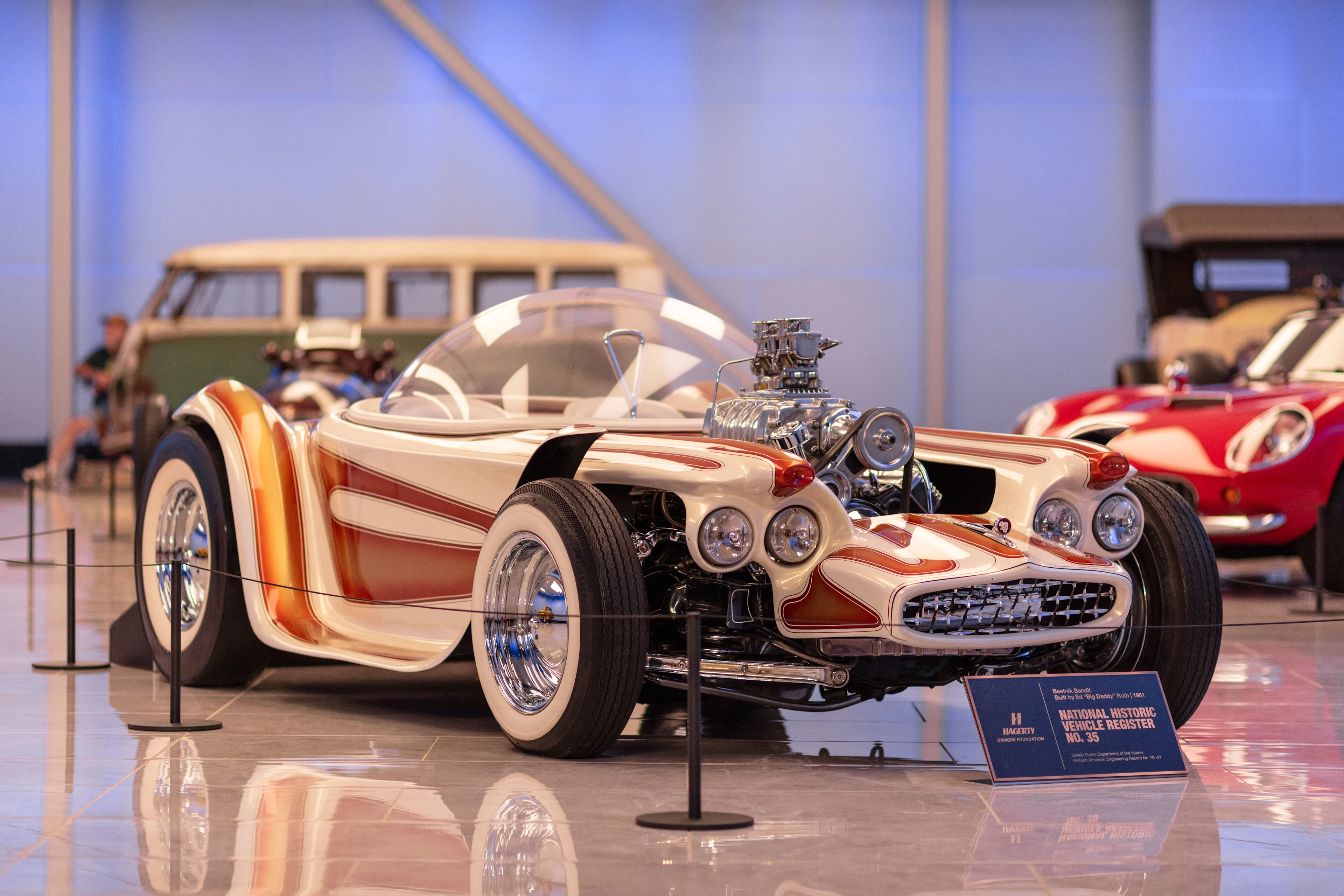
The Beatnik Bandit — Ed “Big Daddy” Roth (NHVR No. 35)
Ed “Big Daddy” Roth built the Beatnik Bandit in 1960–61 with “Dirty Doug” Kinney in a one-car garage, based on a design by illustrator Joe Henning originally created for Rod and Custom magazine. Built on a shortened 1950 Oldsmobile chassis with a handmade fiberglass body, it is topped with a bubble top covering the cockpit. Revell immortalized it as a model car kit, and it later became one of the first Hot Wheels ever produced. It is owned by the National Automobile Museum in Reno, Nevada, where it is on permanent public display.
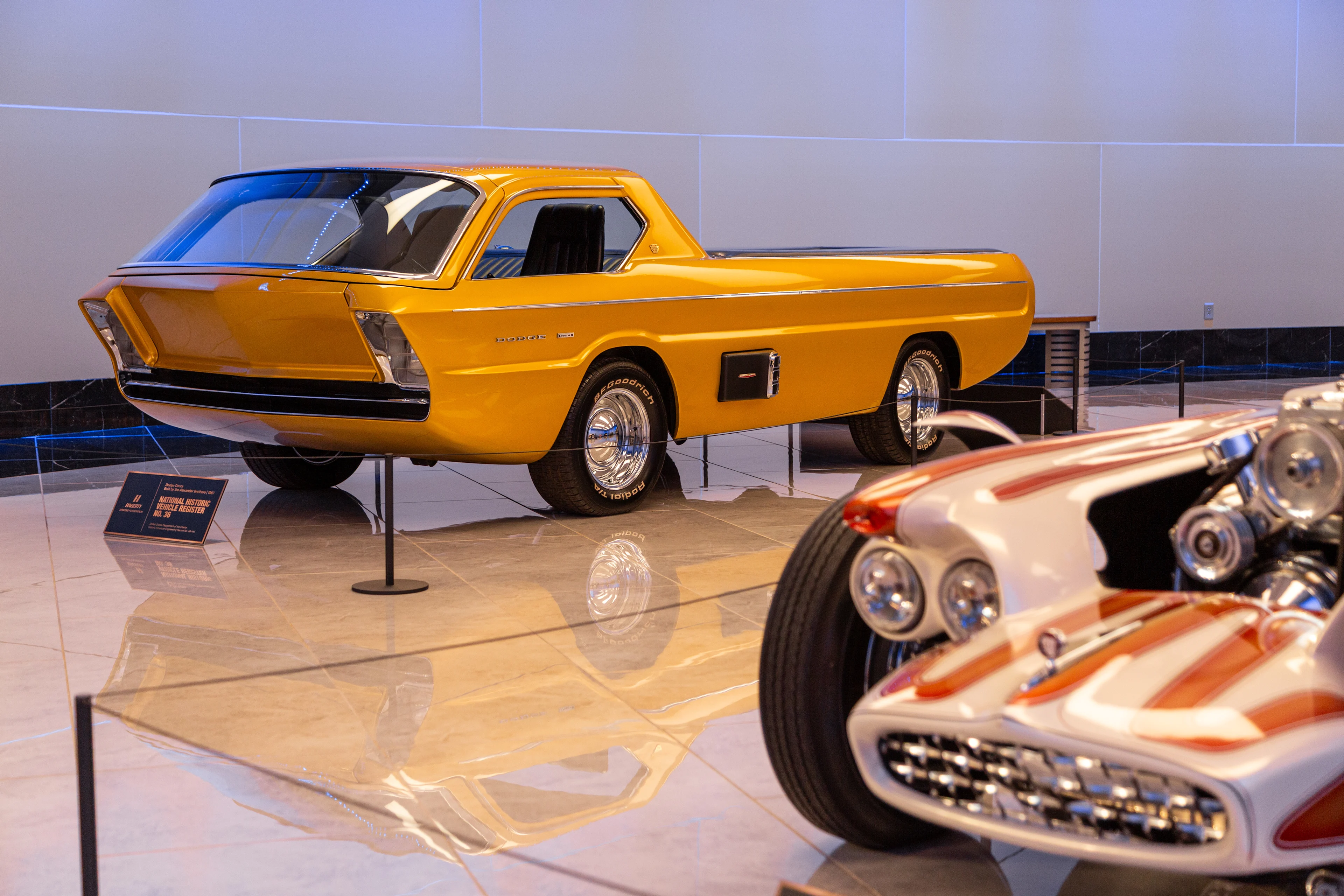
The Dodge Deora — Alexander Brothers (NHVR No. 36)
In the 1960s, brothers Mike and Larry Alexander took a basic Dodge A100 truck and built this wildly customized vehicle from a design by Harry Bentley Bradley. They debuted the Deora at the 1967 Detroit Autorama, where it took the coveted Ridler Award. Dodge leased it and used it at auto shows as a promotional vehicle. AMT immortalized it in a best-selling model kit, and in 1968 Mattel featured the Deora in its popular Hot Wheels line. It is now part of the Tom Abrams Collection.
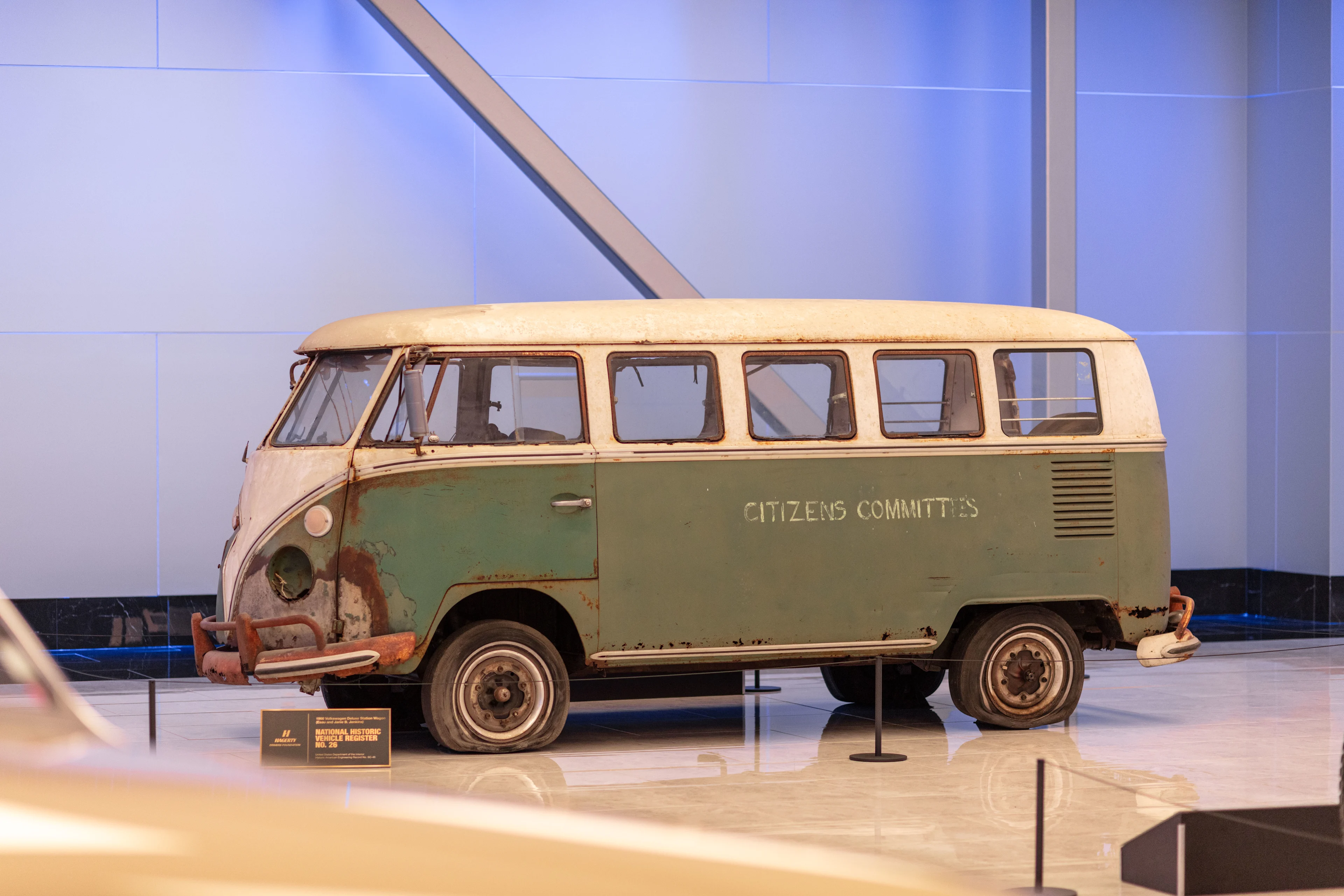
The 1966 Volkswagen Transporter (NHVR No. 26)
Born in 1910 and married in 1927, Esau and Janie B. Jenkins were successful business owners and parents of 13 children who spent their lives working to improve the lives of African Americans on Johns Island, South Carolina. They established the Progressive Club in 1948 — a community center offering voter education, literacy classes, childcare, and a grocery store. In 1957, they helped develop the first Citizenship School in the South, working with Septima Clark and Bernice Robinson to help thousands of residents register to vote. The green Volkswagen, with Esau’s motto “Love is Progress, Hate is Expensive” painted on the rear, was their primary transportation and a fixture in the Charleston area. After Esau passed in 1972, the VW remained in the family’s care. In 2019, the Hagerty Drivers Foundation excavated and stabilized it. The rear panels bearing Esau’s motto are now in the collection of the Smithsonian National Museum of African American History & Culture. The vehicle remains in the care of the Jenkins family.
The Savoy Automobile Museum is a natural home for this exhibition. Founded with a mission to connect people to the cultural diversity of the automobile, the Savoy has built a reputation for changing exhibitions that explore the full breadth of automotive history — not just performance and design, but the cultural, social, and human stories that cars carry with them.
The Hagerty Drivers Foundation is proud to partner with the Savoy Automobile Museum to bring these eight vehicles together and make their stories accessible to the public. The photographs, research, and documentation for each vehicle on the National Historic Vehicle Register are archived at the Library of Congress in perpetuity — ensuring the automobiles that shaped American history are never lost nor forgotten.
“National Treasures: Cars on the National Historic Vehicle Register” is open to the public at the Savoy Automobile Museum, 3 Savoy Lane, Cartersville, Georgia, through December 6, 2026. Visit savoymuseum.org for hours and admission information.
To learn more about the National Historic Vehicle Register and view the full documentation for each vehicle in the exhibition, visit driversfoundation.org/register.



%20Opt-Out%20Icon.svg)