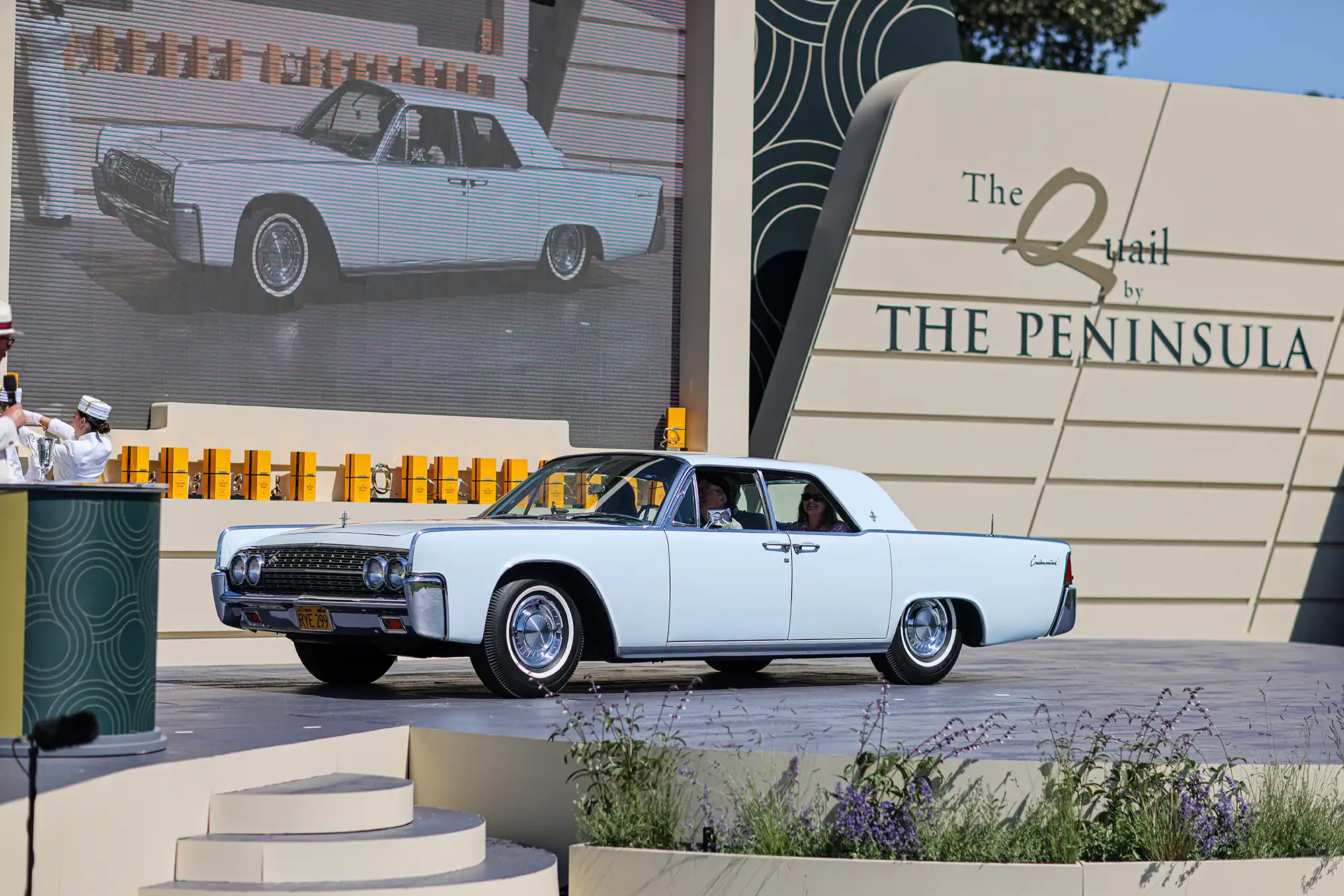
Not every significant car won a race or sold for a record price. Some matter for simpler reasons. This 1962 Lincoln Continental is one of those cars.
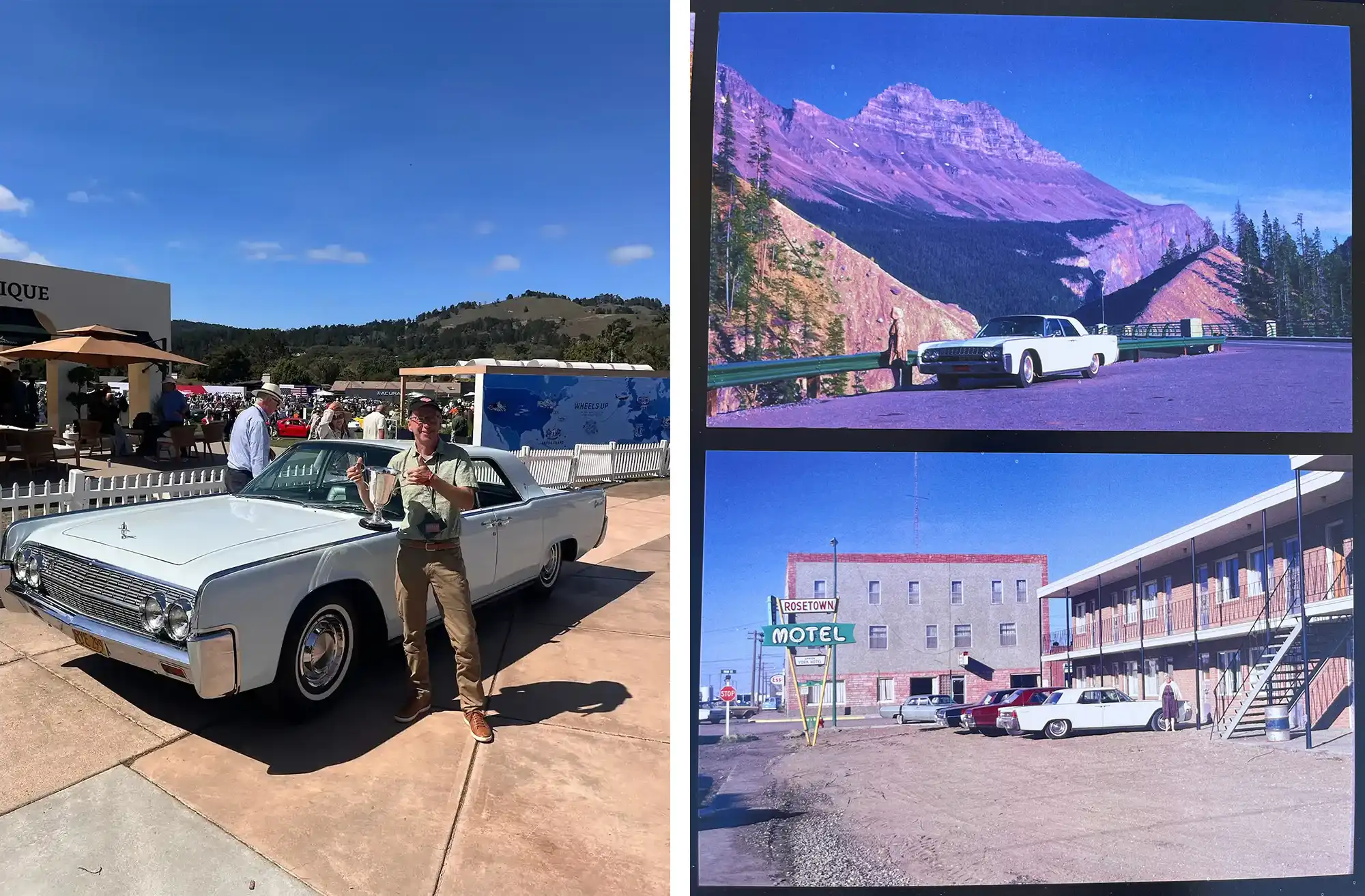
Owner Richard Plavetich grew up riding in the back of this Continental, traveling across America with his grandfather behind the wheel. Today it's a family heirloom, kept in the same condition it has always been. Plavetich — whose own taste runs toward European sports cars — will readily admit that the Lincoln belongs in a different category entirely. It isn't about horsepower or pedigree. It's about memory.
The Continental was a genuine turning point in American automotive design. Penned by Ford designer Elwood Engel and introduced in 1961, it stepped away from the chrome and flash of the 1950s in favor of something cleaner and more considered. The Industrial Design Institute gave it a Bronze Medal — a distinction almost never awarded to an automobile. Its rear-hinged doors remain one of the most recognizable design choices of the era, and the car's influence on what American luxury looked and felt like is hard to overstate.
The Lincoln received the Hagerty Drivers Foundation & FIVA Preservation Award at The Quail: A Motorsports Gathering.
This one has a Hollywood story attached to it — and for once, that isn't an exaggeration.
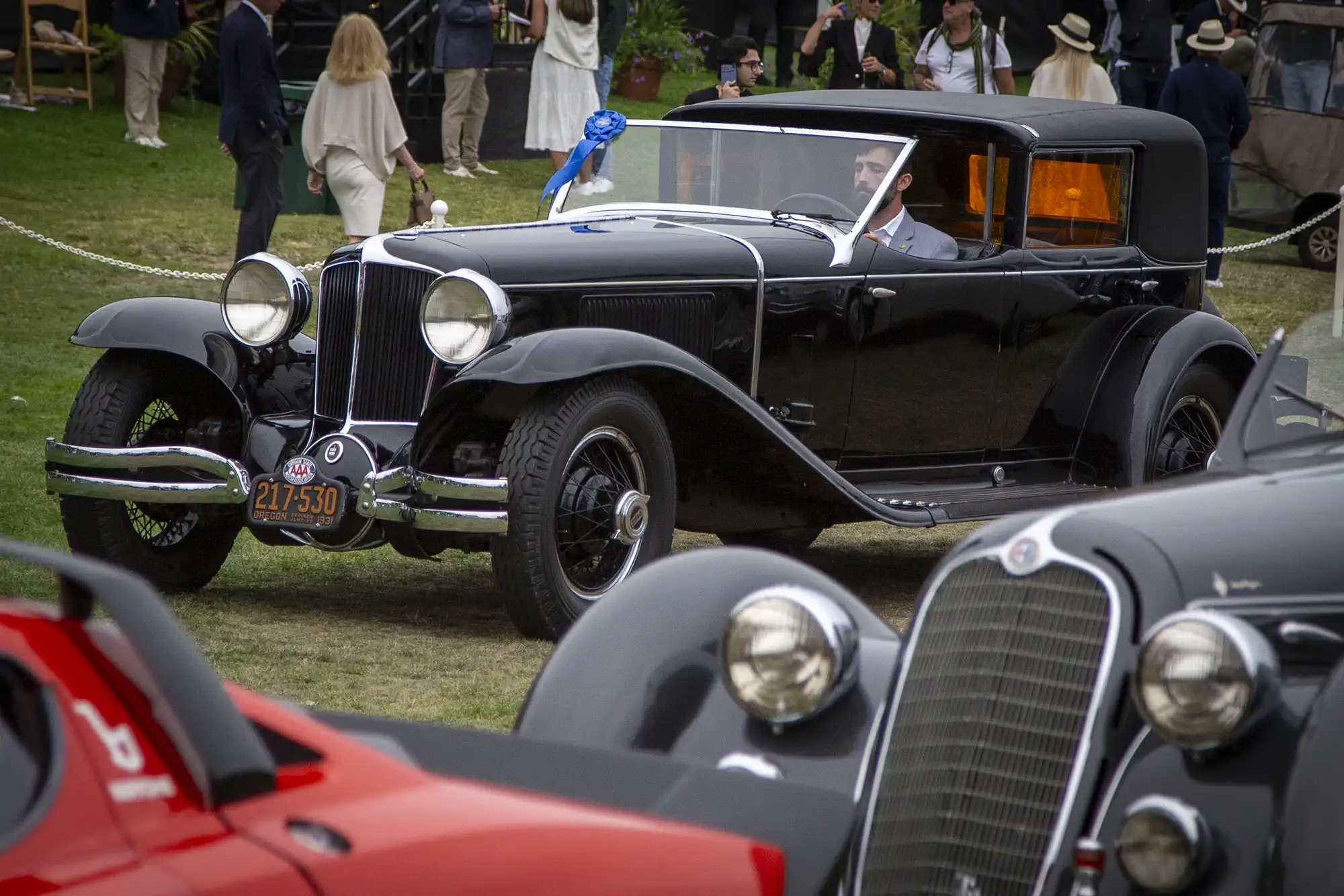
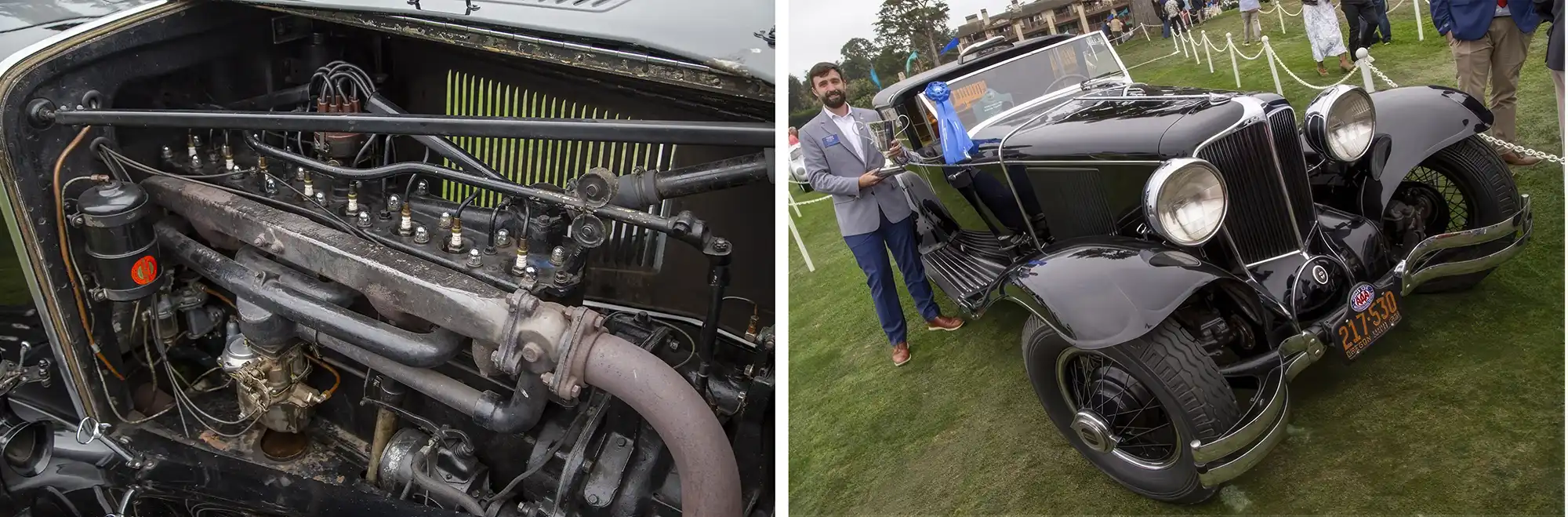
The car has been known as the Dolores Del Río car since the 1950s. Del Río — one of the most celebrated actresses of the silent film era and the first major Latin American female star in Hollywood — left it to her lawyer when she moved to Mexico to begin the second act of her career. It was purchased in Hollywood in 1951, changed hands a small number of times, and came to rest with Pacific Northwest collector Jay Hyde in 1959. Hyde kept it for over 55 years, rarely bringing it out — the most notable exception being the 1987 Pebble Beach Concours d'Elegance, where it was shown alongside other custom-bodied Cords. After Hyde's passing in 2014, the Brumos Collection took ownership and has kept faith with the same standard of care.
The car shows its age honestly. The paintwork and interior are believed to be almost entirely original. The windows have delaminated over the decades, taking on a warm amber tint that gave the car its nickname — "The Orange Pumpkin." Nobody has touched them, and nobody should.
As a piece of automotive history, it sits in rare company. This is one of only four L-29 Town Cars bodied by Murphy & Co. of Pasadena, and the only one built on the shorter standard wheelbase — which gives it a compact, unbroken profile unlike the others. The L-29 itself was the first mass-produced front-wheel-drive automobile in America, a racecar-derived design that caught the eye of coachbuilders on both sides of the Atlantic. Very few were ever sent to outside coachbuilders, and the Depression ended production after just 5,010 cars were built. Around 300 are thought to exist today.
At the 2026 Pebble Beach Concours d'Elegance, the Cord received the Hagerty Drivers Foundation & FIVA Pre-War Preservation Award.
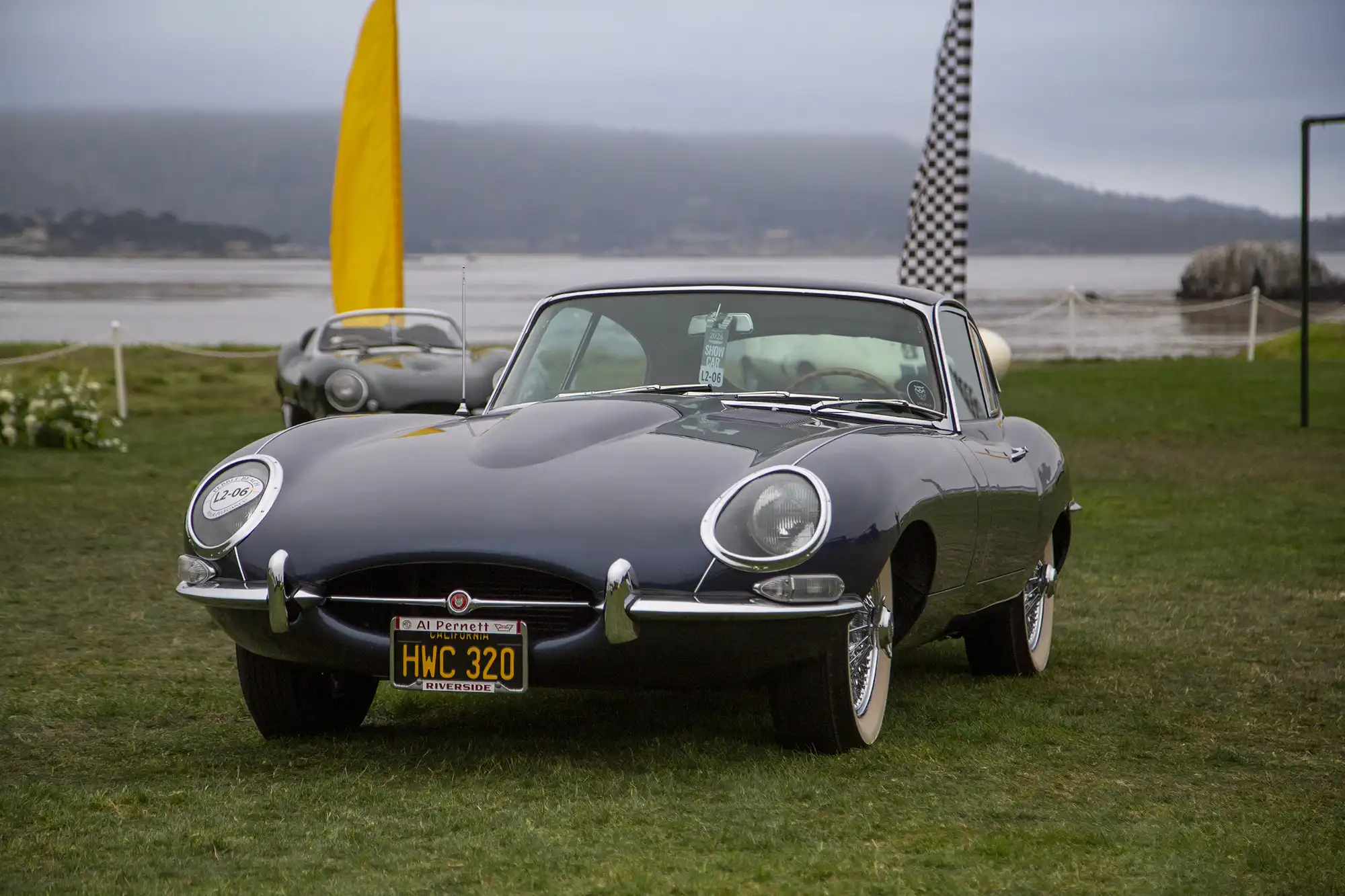
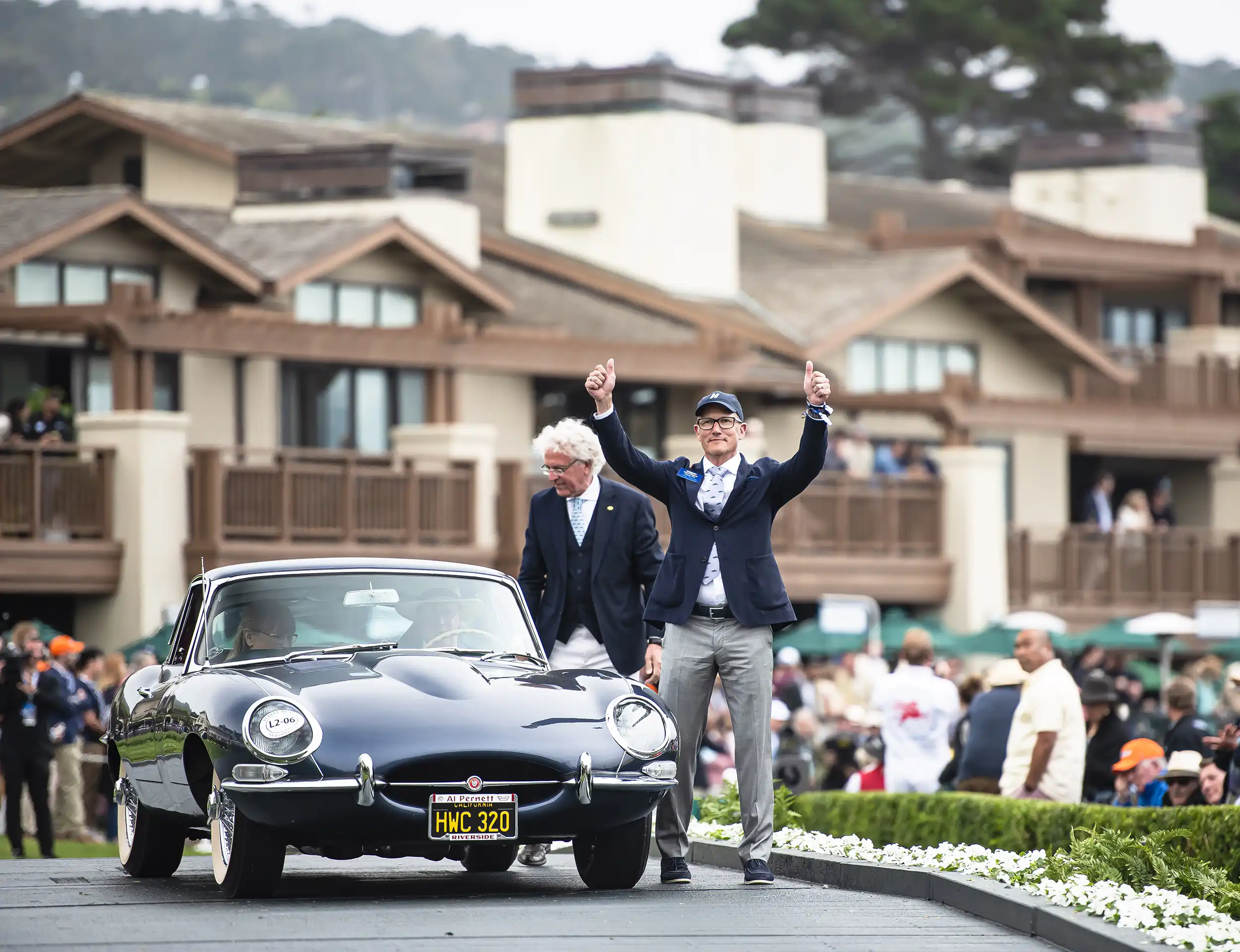
This 1963 Jaguar E-Type was sold new in California and stayed with its original owner for 25 years before passing on. In 2023, that owner's grandson came across it for sale and bought it back — more than six decades after it first left the family.
The condition is what stops people in their tracks. Just over 30,000 miles on the odometer, never restored, with the original paint, interior, and mechanicals largely intact. Owners Buzz and Julia Lynn know they're not just keeping a car — they're keeping a record. An unrestored E-Type at this age tells you something no restored example can: what the car actually was when it left the factory. That kind of evidence gets rarer every year.

The E-Type needs little introduction, but its significance is worth stating plainly. When Jaguar unveiled it at the 1961 Geneva Motor Show, the reaction was immediate. Enzo Ferrari reportedly called it the most beautiful car ever made. With a top speed of 150 mph and a price that undercut nearly every comparable European sports car, it made performance accessible in a way that genuinely changed the market. The Series 1 cars — built from 1961 to 1968 — are considered the purest expression of the design, and an early example like this one, in original condition, represents something increasingly difficult to find.
At the 2026 Pebble Beach Concours d'Elegance, this Jaguar received the Hagerty Drivers Foundation & FIVA Post-War Preservation Award.
A family Lincoln. A Hollywood Cord. A Jaguar that found its way home. The cars honored this year at Monterey Car Week come from completely different worlds, but each one arrived here for the same reason: somebody decided it was worth protecting exactly as it was.
That decision is never the easy one. Restoration is always an option, and often a tempting one. Preservation takes restraint — and a willingness to accept wear and age as part of what makes a car meaningful rather than something to be corrected. The Brumos Collection, Richard Plavetich, and Buzz and Julia Lynn all made that choice, and the cars are better for it.
Recognizing that choice is what the HDF & FIVA Preservation Awards are for. We present them alongside FIVA, the Fédération Internationale des Véhicules Anciens, and in honor of Dr. Fred Simeone. A neurosurgeon by profession, Dr. Simeone spent his life building one of the world's great collections of racing sports cars in Philadelphia. At a time when concours-perfect restorations set the standard, he made the case that a car's patina, its wear, its original condition were not flaws to be corrected but evidence to be protected. That idea shaped these awards, and it is embodied in every car we recognize. We're glad to celebrate these three, and the people behind them, here at two of the finest events in the automotive calendar.



%20Opt-Out%20Icon.svg)