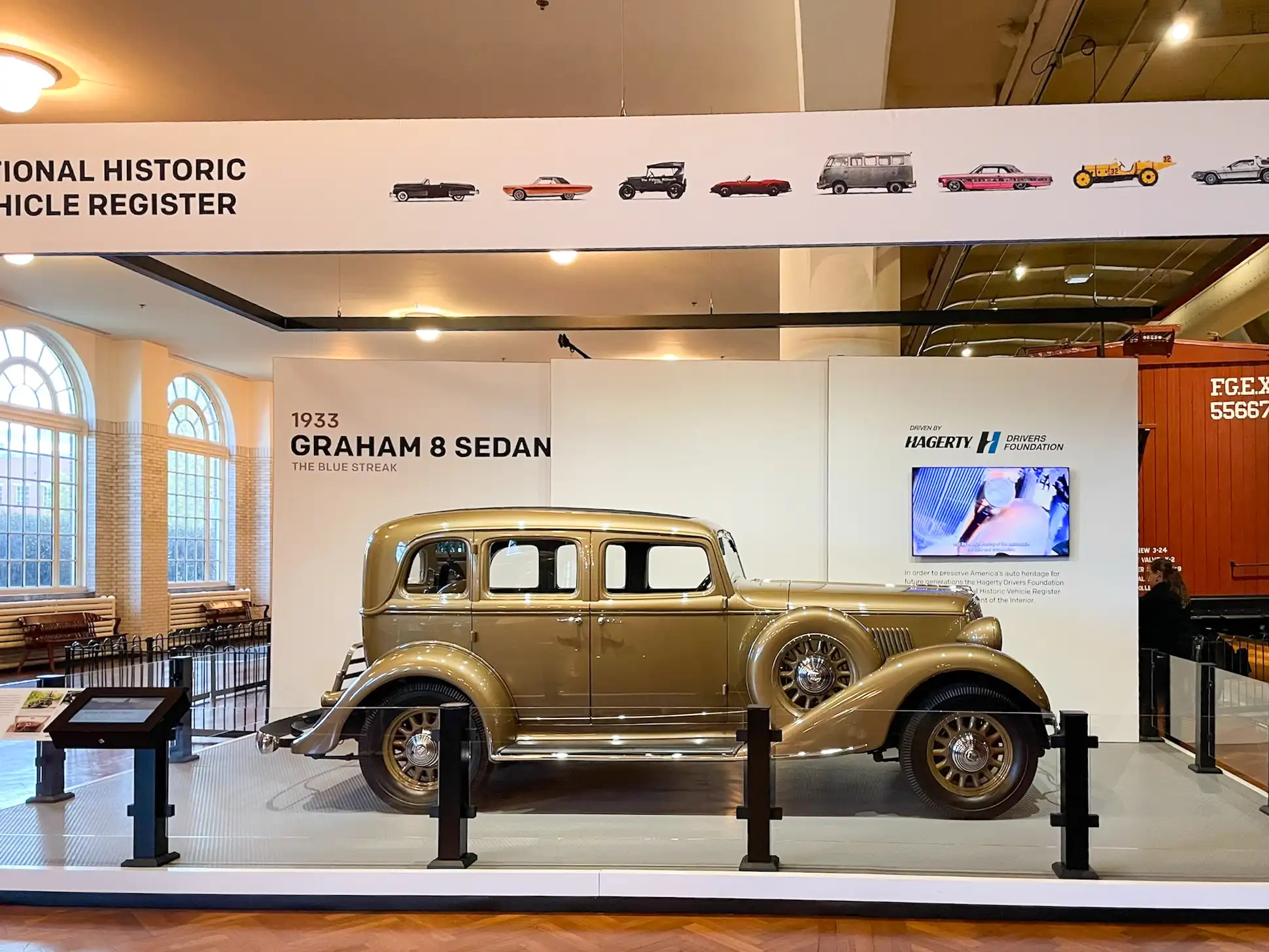
Now on display at The Henry Ford Museum of American Innovation: the 1933 Graham Blue Streak!
The Graham is the latest vehicle in the museum’s rotating National Historic Vehicle Register exhibit, presented in partnership with the Hagerty Drivers Foundation. Every six months, a different vehicle from the Register takes the floor, and the Graham will be on display through April 2027. Admission to the exhibit is included with your museum ticket.
Introduced for the 1932 model year, in the depths of the Great Depression, the Blue Streak represents an important shift in automotive design history. Before the Blue Streak, most cars were designed with function over form in mind. Cars were engineered, and styling came later. Streamlined styling by Amos Northup gave the Blue Streak a laid-back grille and windshield, body-colored headlights, a concealed radiator cap, wraparound “skirted” fenders, pearl-essence paint, and a totally concealed frame.
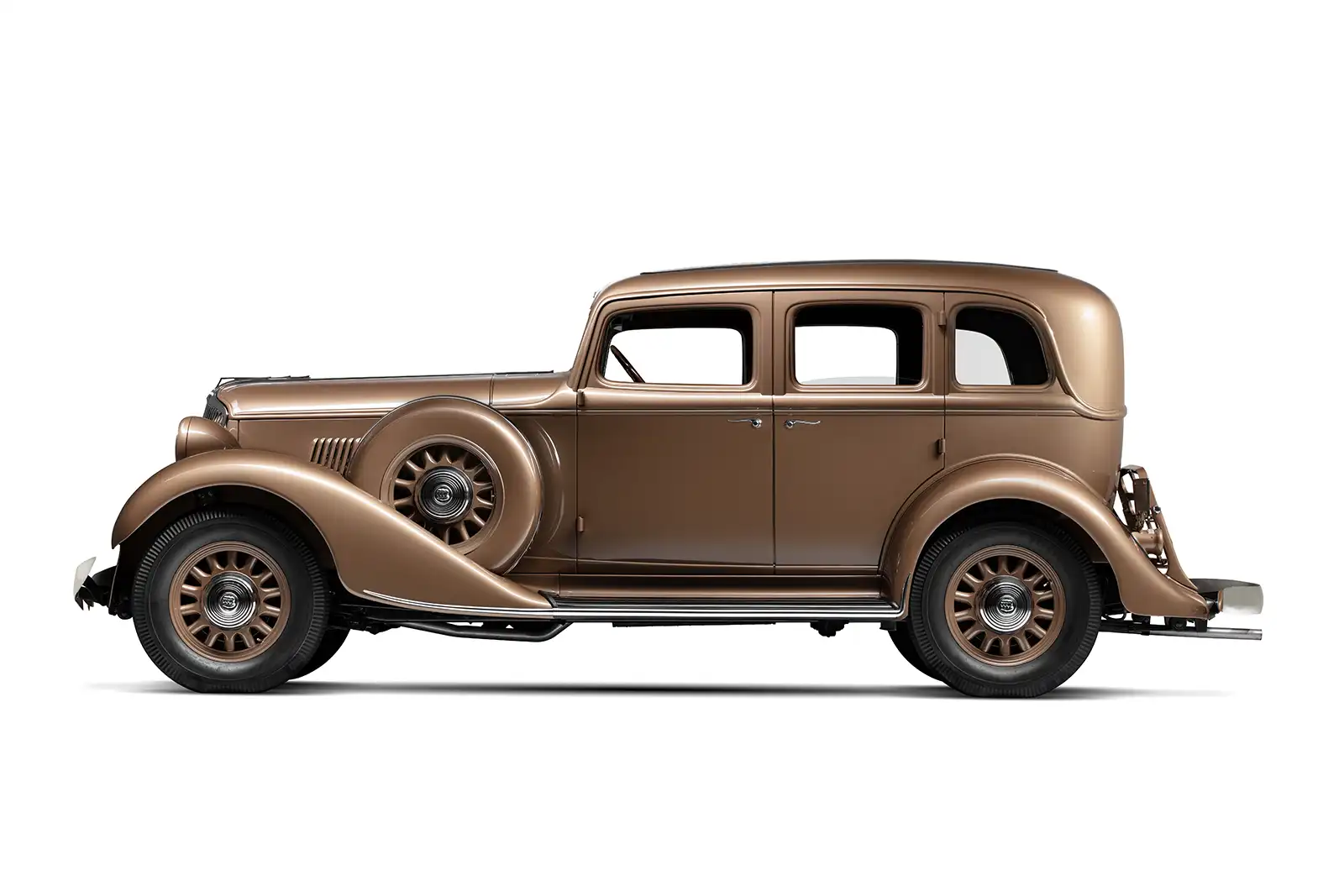
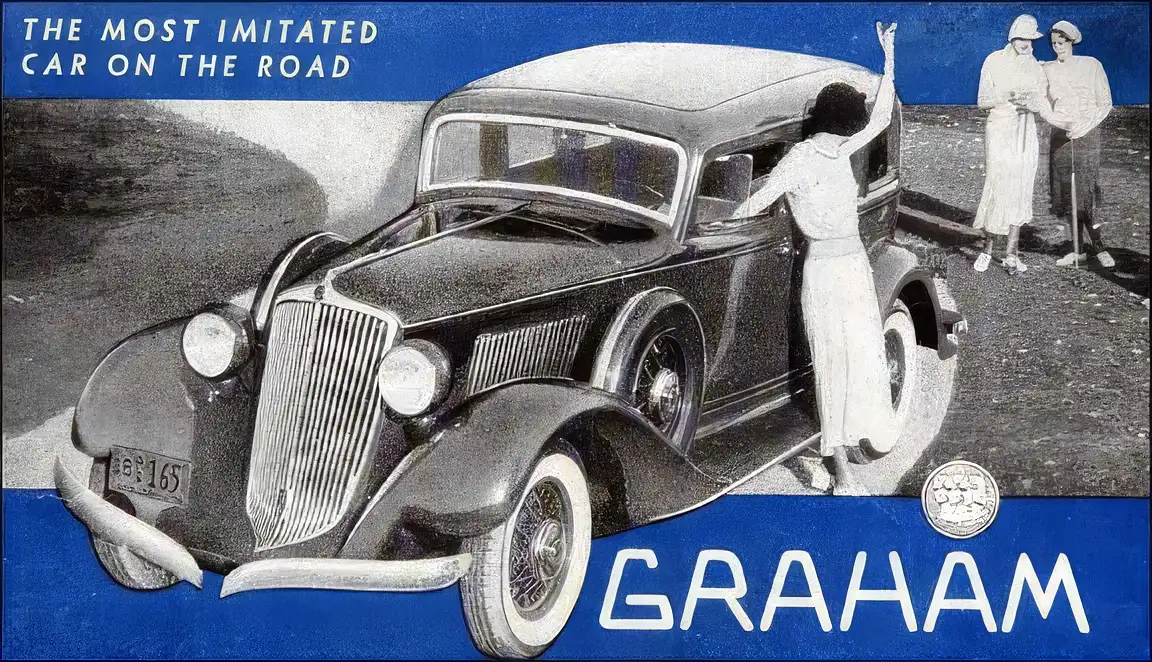
Only about 13,000 Blue Streaks were sold, but its influence far outweighed its sales numbers. Ford, Chevrolet, Plymouth, and many other major automakers quickly adopted these features, and by 1933 Graham was touting the Blue Streak as “the most imitated car on the road.” By 1934, skirted fenders were nearly universal.
The Blue Streak’s innovation went beyond styling. Its banjo-style frame let the axle run between split frame rails, and the rear springs were mounted outboard of those rails rather than beneath them. The result was a lower overall stance and better handling than its contemporaries, with the frame itself tucked out of sight.
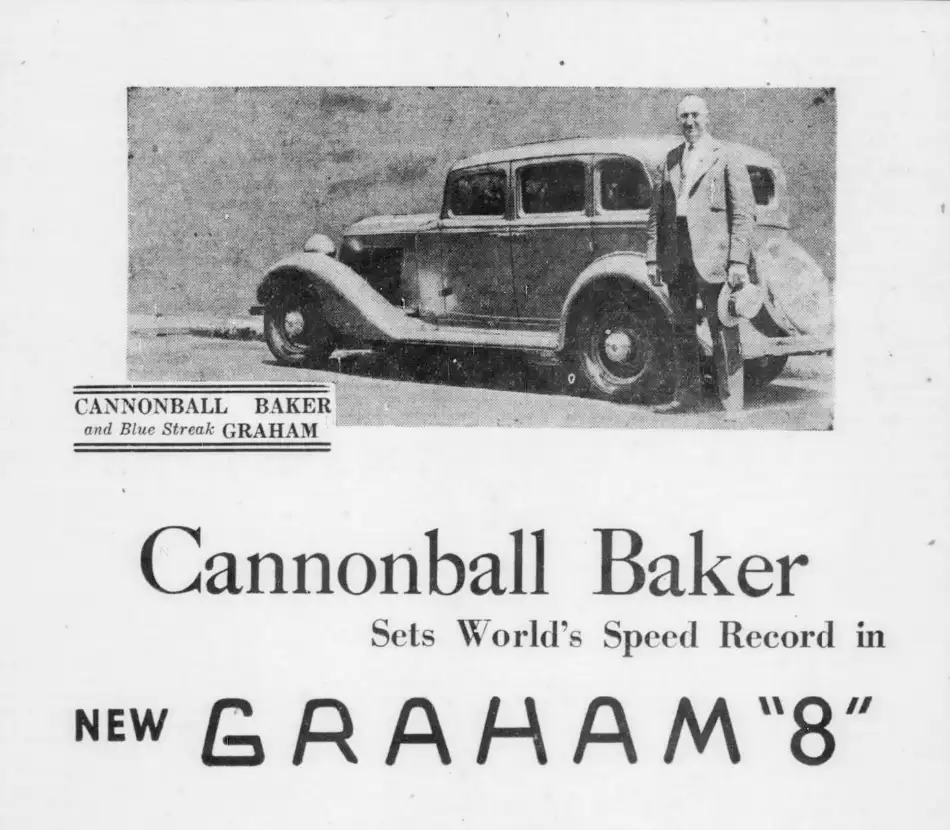
The Blue Streak also proved it could go the distance. In 1933, Erwin “Cannonball” Baker drove a Blue Streak Eight from New York to Los Angeles in 53½ hours, a record that went unbeaten for decades. Baker was later the inspiration for the famed “Cannonball Run.”
The 1933 Graham on display is owned by the NB Center for American Automotive Heritage in Allentown, Pennsylvania, which acquired it in 2010 and completed a meticulous restoration. Saving cars like the Graham is central to the NB Center’s mission. Historic “everyman” cars are often lost because the cost of restoring them exceeds their value, and the NB Center works to preserve them anyway.
The restoration included a repaint in the car’s original shade of Golden Tan “Pearl Essence.” Graham’s pearl-essence finish got its sparkle from fish scales, and to replicate it, the restorers had to grind the metallic finish finer before applying it. The Blue Streak is restored to running condition and driven often. Power comes from a flathead inline-eight making 90 horsepower, paired with a three-speed manual transmission with a “freewheeling” mechanism.

Like every vehicle on the Register, the Graham has been documented for the historical record under the Historic American Engineering Record (HAER No. PA-654), the federal documentation program whose archive is held at the Library of Congress.
Learn more about the car on its National Historic Vehicle Register page, and plan your visit at The Henry Ford’s website.
Check out our video on the Graham Blue Streak below!